
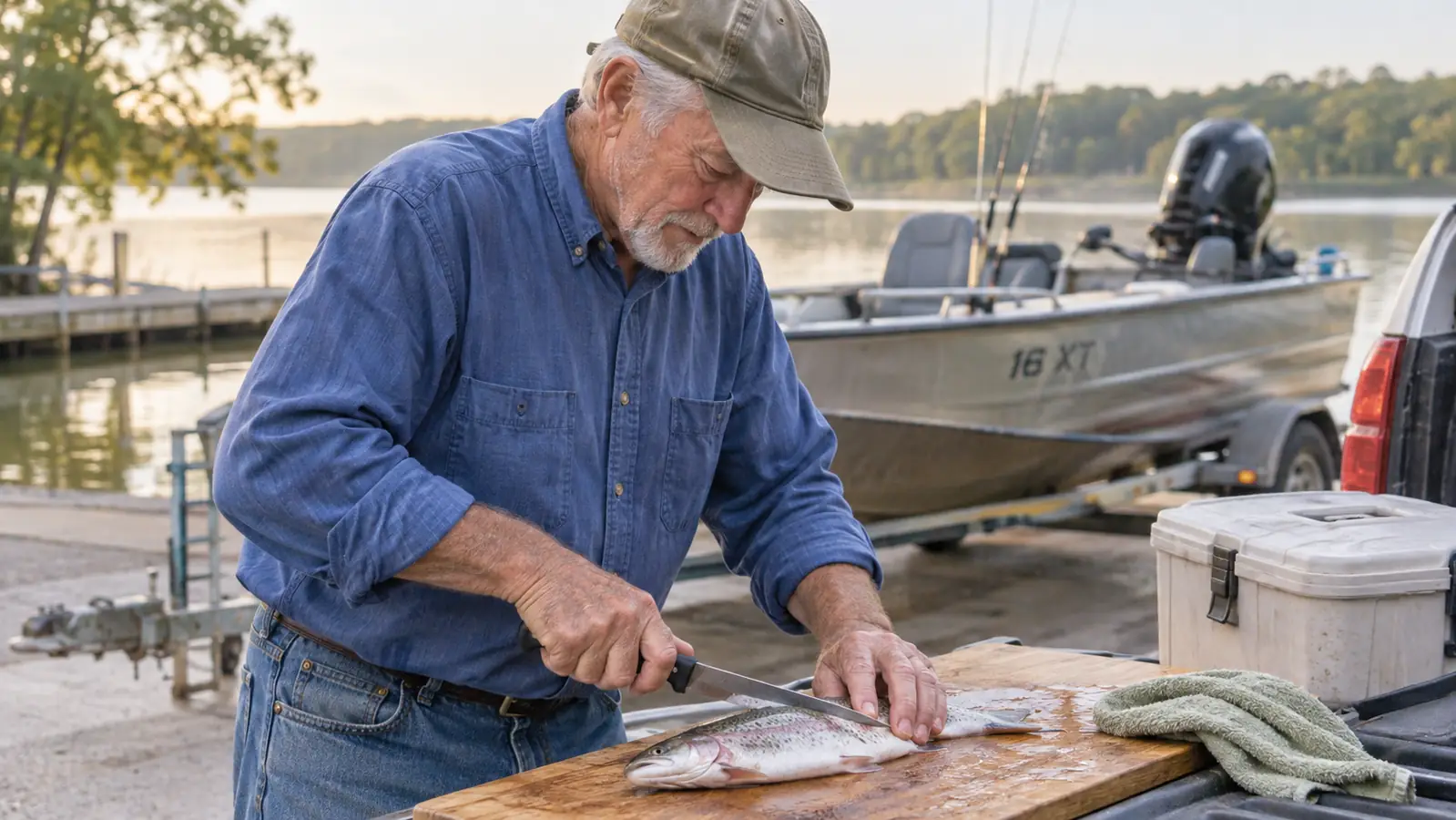
The first fish I put the BUBBA 7 Inch Tapered Flex to was a two pound crappie out of a bayou north of my place, and I had already ruined two before it. Not because the fish were tough. Because the knife in my hand was too stiff and too thick out at the tip, so I was grinding through the rib bones instead of slicing along them, and I was leaving a strip of good meat on every frame. I have cleaned fish for about 45 years, and I will say it plainly: a stiff blade costs you more meat in one season than a bad hookset ever will. So I ordered the BUBBA, mostly to find out whether a tapered flex blade was worth arguing about. One season later, I have my answer, and the answer is sitting in the boat's toolbox right now.
Here is the short version. It is the knife that stayed on the boat. It is not the knife I reach for when I am breaking down a big catfish, and I will get to that. But for crappie, bass, and the slot fish I bring home a few times a summer, the thin 7 inch blade makes clean work of a fillet, the non slip grip has not slipped on me yet, and the safety guard at the top of the handle has already saved the base of my thumb once. The BUBBA earned its spot, and it earned it on fish that were headed for the grease anyway.
The Quick Verdict
A thin, flexible 7 inch blade that follows the bone instead of riding over it, with a grip that holds up to wet hands and fish slime. It is not a catfish knife, and it is hand wash only.
Amazon Check Today's Price →The Blade That Stopped Me Leaving Meat on the Frame
7 inch tapered flex blade in 8Cr13MoV, non slip grip, safety guards, sheath included. Check today's price on Amazon.
Amazon Check Today's Price on Amazon →How I've Used It
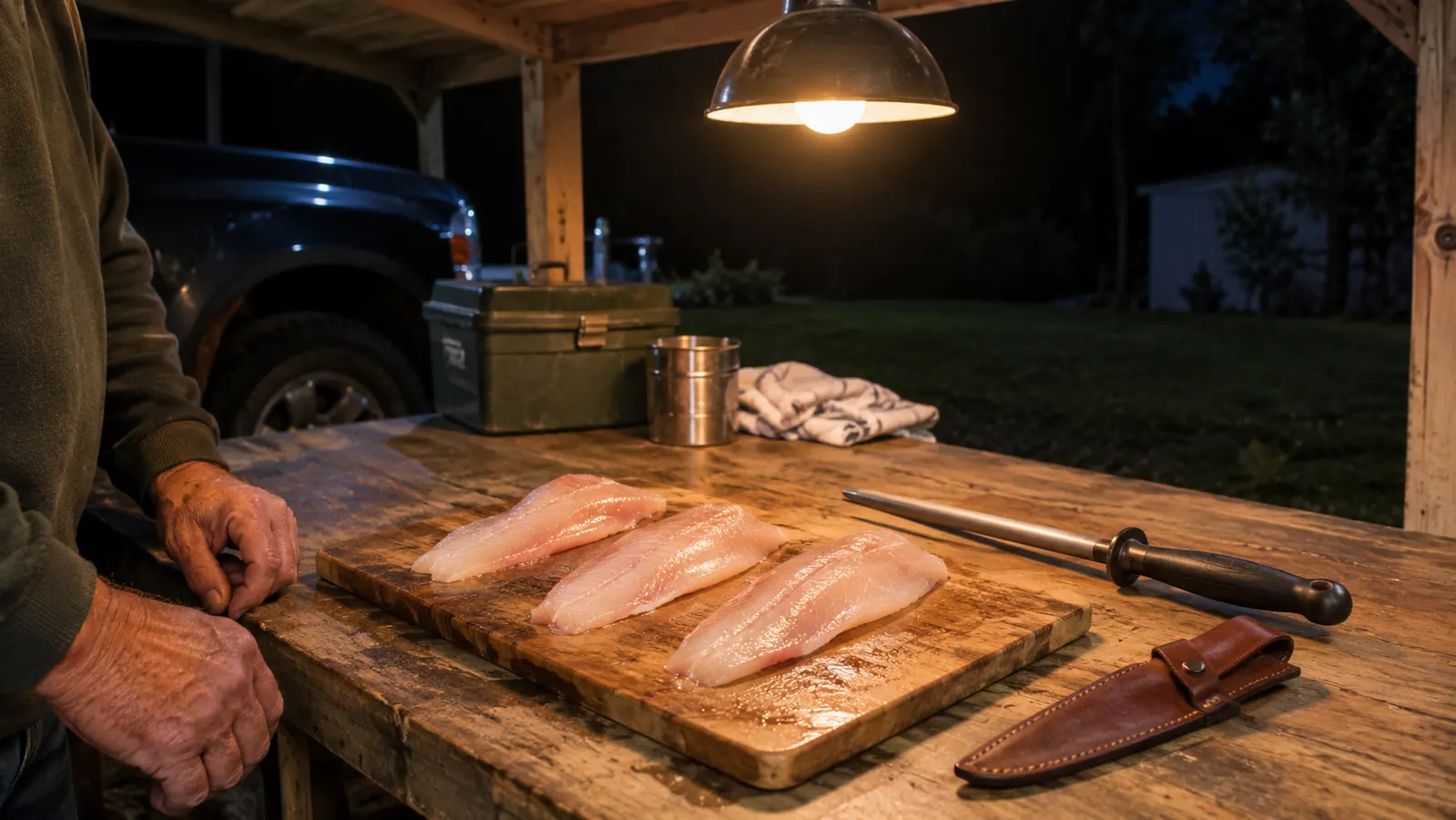
Most of my fishing is bass, crappie, and catfish on the lakes and bayous within an hour of the house. I keep the BUBBA in the boat's toolbox next to a sharpening steel, and it comes out on the tailgate or on the lid of the cooler, whichever is flatter. I clean fish at the ramp when the biting is good and I clean them at home under the carport light when it is not, and the knife has done both jobs without complaint. My granddaughter Kaylee, who is 11 and fishes with me most weekends in a life jacket, has gotten to where she wants to do the filleting herself. I let her start on the crappie, because they are small, they are forgiving, and if she slips, the guard is between her hand and the blade.
Crappie are where a flex blade shows you what it is for. The spine of a crappie is not much thicker than a pencil, and there is maybe a quarter inch of meat on either side of it. A stiff knife rides up over the ribs and leaves that meat attached to the frame. A thin blade that gives a little will follow the bone down and come out the other side with a whole fillet. The first limit I cleaned with the BUBBA, I got 14 fillets off 14 fish without once having to go back and trim a strip off a carcass. That has not been my experience with every knife I have owned, and I have owned a pile of them.
I have also used it on bass up to about four pounds, on white bass in the spring run, and on a few catfish small enough that the shoulder bones were not a fight. Same story. The trailing point tip lets me start the cut behind the head without punching through the top of the fillet, which is a mistake I made for years with a pointed blade. It is a working knife, not a showpiece, and after a season it looks like a working knife.
One more note on how I use it. I do not saw. The whole point of a thin, flexible blade is that you lay it against the backbone and push, and it finds its own way along the bone. When I catch myself sawing, it is usually because the edge needs two passes on the steel, not because the blade is wrong for the job.
The Blade: 7 Inches of 8Cr13MoV and Why the Taper Matters
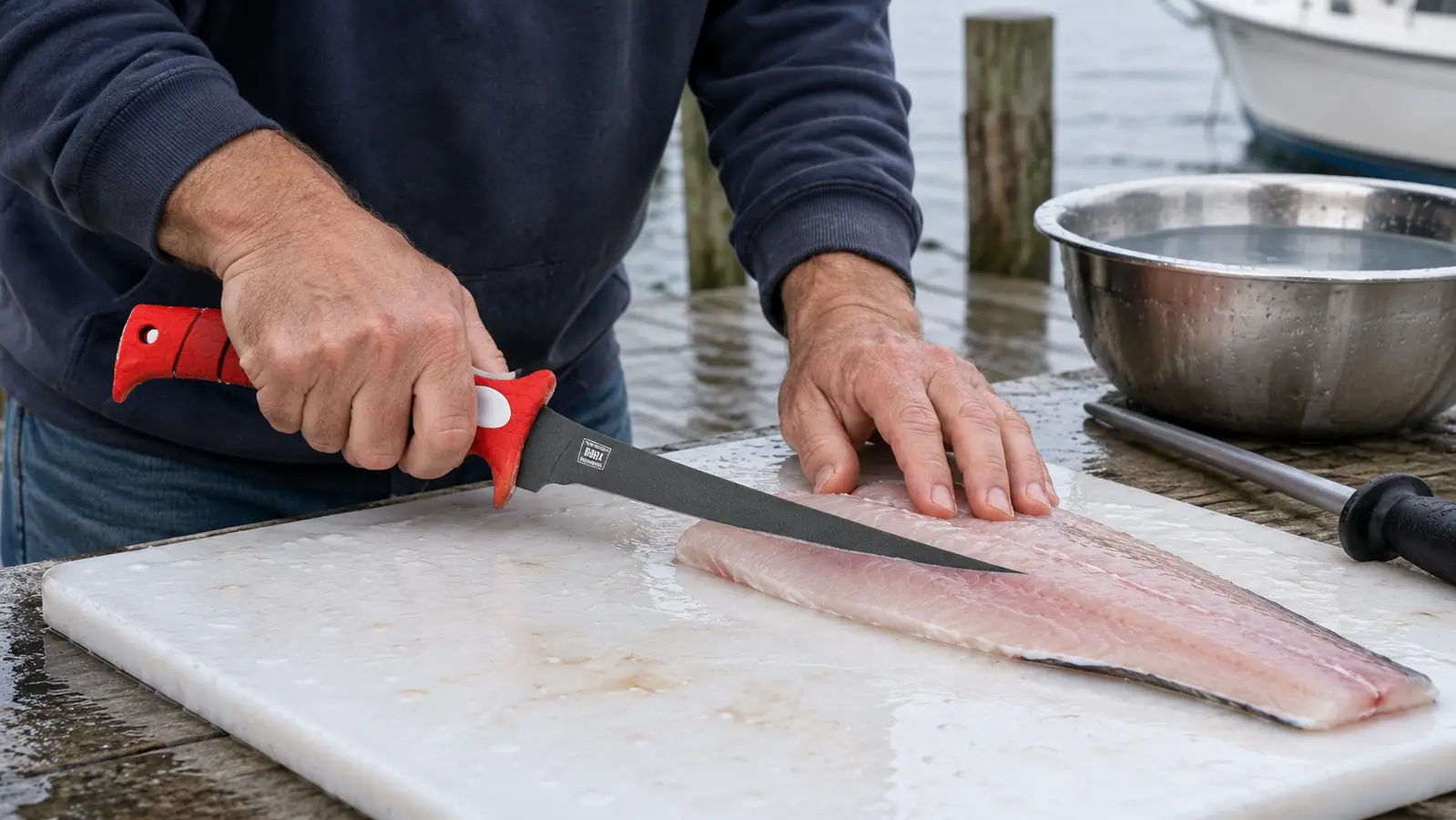
The blade is the argument. It is 7 inches long and the knife is 13 inches overall, which is longer than some folks expect a fillet knife to be. That extra length has not bothered me. It gives you a full stroke from the head to the tail on a bass without stopping to reposition your hand, and when you are working through 20 fish at the ramp with the light going, that matters more than it sounds.
The steel is 8Cr13MoV and the blade is ground thin, and that combination is why it flexes. It is not a spring. It does not whip. But it will bend enough to follow a rib cage and come back true when you let off. The edge is a V grind, straight edge, so there is no serrated section to tear meat and nothing to work around. I like that better than I expected to. A straight edge is easy to bring back with a steel or a stone, and I can do it on a tailgate in the dark without thinking about it.
I touch it up every third trip or so. Not because it goes dull in a hurry, but because I am particular about an edge. The first few fish after a touch up, the blade will shave through a fillet clean enough that the skin comes off in one piece with almost no pressure from my hand. That is the whole reason I wanted a thin blade. Pressure is what ruins fillets. The knife should do the work, and this one does.
What it will not do is pry. If you are the kind of person who uses a fillet knife to open a paint can or cut a bait leader, buy a pair of pliers and leave the blade alone. A thin blade and a sideways load do not get along, and that is true of every flexible fillet knife ever made, not just this one.
The Handle and the Trigger Grip
I have hands that have been broken and put back together over 30 odd years of pipeline work, and they are not what anybody would call delicate. Wet, cold, and covered in fish slime is the normal condition of my grip from November through March. The handle on this knife has a non slip surface and a trigger grip cut into it, and the trigger grip is the part I did not expect to care about. It puts my index finger in a notch that keeps my hand from creeping forward onto the blade when I push through a fillet.
It is ambidextrous, so my son Travis can use it left handed without fussing about it. I have not had a wet hand slip on this handle in a full season, and I have cleaned fish in some nasty weather. What I will say is that the texture that makes it grip also picks up slime, so I rinse it and dry it before it goes back in the sheath instead of wiping it on my pants. It is hand wash only. Believe that. A dishwasher will cook the edge and punish the handle, and you will be buying another one.
Safety Guards, the Sheath, and Care
There are safety guards built in above the handle to keep your hand off the blade and off the spines of the fish you are working through. I did not think much of them out of the box. Then a bass flopped on the table while my hand was braced against its spine, and the guard took the hit instead of the base of my thumb. I am a believer now. If you are teaching a kid to clean fish, those guards are the reason I would hand them this knife before I handed them mine.
The sheath came with the knife. It is a plain sheath with a belt loop, it holds the blade snug, and it has not worn through in a season. It is not a locking molded sheath and it is not going to win anybody an award, but it lives in the boat's toolbox and it does its job. The knife carries a limited one year warranty from BUBBA. I have not had to use it, and from the way the knife is put together I do not expect to.
How It Held Up Over a Full Season
This is the part that separates a knife you keep from a knife that ends up in the bottom of a drawer. I carried it from the spring crappie bite through the summer bass and into the fall. It has been rained on, dropped on aluminum, left in the toolbox overnight in a Louisiana August, and rinsed in lake water more than once when I was too tired to do it properly. No rust spots on the blade. No wobble where the blade meets the handle. The edge has held up better than I expected from a knife in this class, and the grip has not gotten slick or gummy.
Where it has not been perfect. A flexible knife is not a breaking knife, and I do not care how good the steel is. Travis brought home a 12 pound blue cat and I tried to work it with the BUBBA, and around the big shoulder bones I could feel the blade flex further than I wanted it to. I finished that fish with a heavier knife and I was glad I had one in the boat. If catfish make up most of your cleaning, this is your second knife, not your first.
The 7 inch blade is also longer than some people want for panfish. It took me a couple of trips to get used to the reach, and Kaylee still prefers a shorter blade for bluegill. Longer is not better, it is just different. It suits a mixed bag, which is what most of us actually catch.
The steel is good, but 8Cr13MoV is not a super steel, and I would not pretend otherwise. If you clean 40 fish in an afternoon and never touch the edge, you will feel it falling off by the end of the pile. That is normal. Ten strokes on a steel and it is back to work. I have never had to put it on a stone in the middle of a season.
What I Liked
- Thin 8Cr13MoV blade follows the rib cage instead of riding up over it
- Non slip grip with a trigger notch that keeps your hand off the blade
- Safety guards above the handle have already saved the base of my thumb
- Trailing point tip starts the cut behind the head cleanly
- Ambidextrous, so a left handed hand works as well as a right
- Sheath included and it stays put in the boat's toolbox
- Held up for a full season of rain, heat, and lake water with no rust and no wobble
Where It Falls Short
- Hand wash only, and a dishwasher will ruin it
- Too flexible around the shoulder bones of big catfish
- 8Cr13MoV needs a touch up every few trips
- 7 inch blade is more reach than some panfish folks want
- Sheath is plain with no locking retention
A stiff blade rides up over the ribs and leaves meat on the frame. A thin one follows the bone down and comes out the other side. That is the whole argument, and it holds up fish after fish.
Who This Is For
If you clean panfish, bass, or slot fish in any volume, and you are tired of trimming strips of meat off the carcass because your blade will not follow a bone, this is the knife. It is also the knife I would hand somebody who is learning, mostly for the guard and the grip. Kaylee has cleaned her own crappie with it since June, and I have not had to put a bandage on anybody.
It suits a boat fisherman who wants one knife in the toolbox that covers most of what he catches, keeps an edge with a few strokes of a steel, and does not need to be babied past a hand wash and a dry. If you are filleting on a tailgate at the ramp with a headlamp on your cap, it works. If you are doing it on the kitchen counter with the radio on, it works there too.
Who Should Skip It
If catfish are your main fish, skip it as an only knife. Big blues and flatheads have shoulder bones that want a stiff, heavy blade, and nobody looks good fighting a knife through a bone. I keep both, and I would not want to be without the heavier one. I would also skip it if you want a knife that goes in the dishwasher. Hand wash only is on the care instructions and I believe them.
And if you want a short, stiff blade for perch and bluegill and nothing else, a 7 inch fillet is more reach than you need. Look at a shorter blade and save yourself the adjustment. This one is built to work across a mixed season, and it has done that well enough that I quit looking at other knives in the catalog.
One Knife, One Season, and It Never Left the Boat
7 inch tapered flex blade, non slip grip, safety guards, sheath included, limited one year warranty. Check today's price on Amazon.
Amazon Check Today's Price on Amazon →