
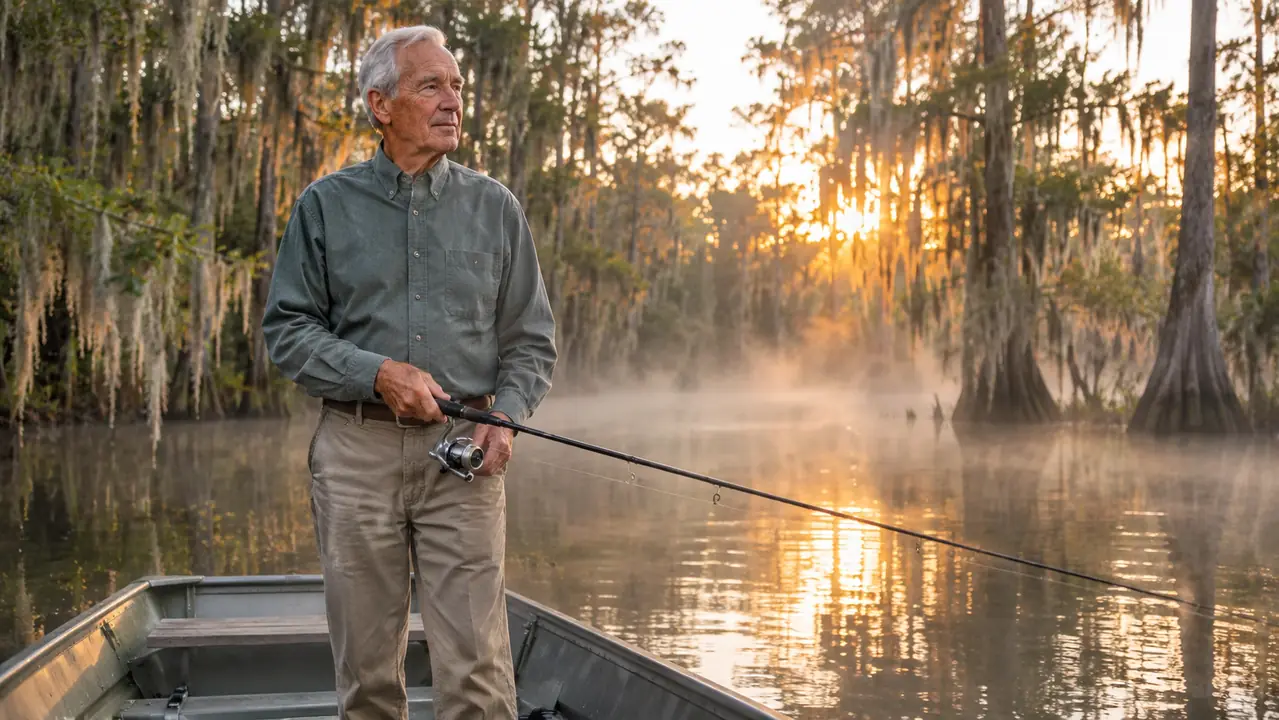
A bayou does not care what you paid for a rod. It cares whether your lure gets in front of a fish and whether you can get it back out again. I have stood up in a jon boat more than once with a bait wrapped around a cypress limb and a rod tip bent in a direction the rod was never built for. Every one of those mornings taught me something, and none of it was about the bait.
I am 63 now, retired off the pipeline, and I have fished the lakes and bayous around north Louisiana for about 45 years. For most of that time I carried two rods, because one rod could not do both jobs. The KastKing Centron Lite Twin-Tip is the first combo in a long while that made me leave the second rod in the truck. It is a two-piece spinning combo, 6 foot 6 inches, medium power, built on an IM6 graphite blank, with a 2000 size reel geared at 5.2:1. That is a plain description of a plain tool, and plain is what a bayou rewards.
Here is what most people get wrong. They buy the combo, they spool it, they stand up in the boat, and they start throwing long overhand casts at the bank. Two hours later they have lost two lures, hung a third in a tree, and decided the rod is no good. The rod was never the problem. The order of operations was.
What follows is how I actually fish it. Five steps, in the order I would teach them to my son Travis, or to my granddaughter Kaylee when she gets past wanting to catch bream off the dock. None of it requires a second boat or a second tackle box.
The combo that let me leave the second rod at home
A 6 foot 6 inch medium power IM6 graphite blank, a 2000 size reel at 5.2:1, an ambidextrous handle, and a two-piece build that fits behind the seat of the truck. It handles a crappie jig and a bass bait in the same morning.
Amazon Check Today's Price on Amazon →Step 1: Spool it right the night before you go
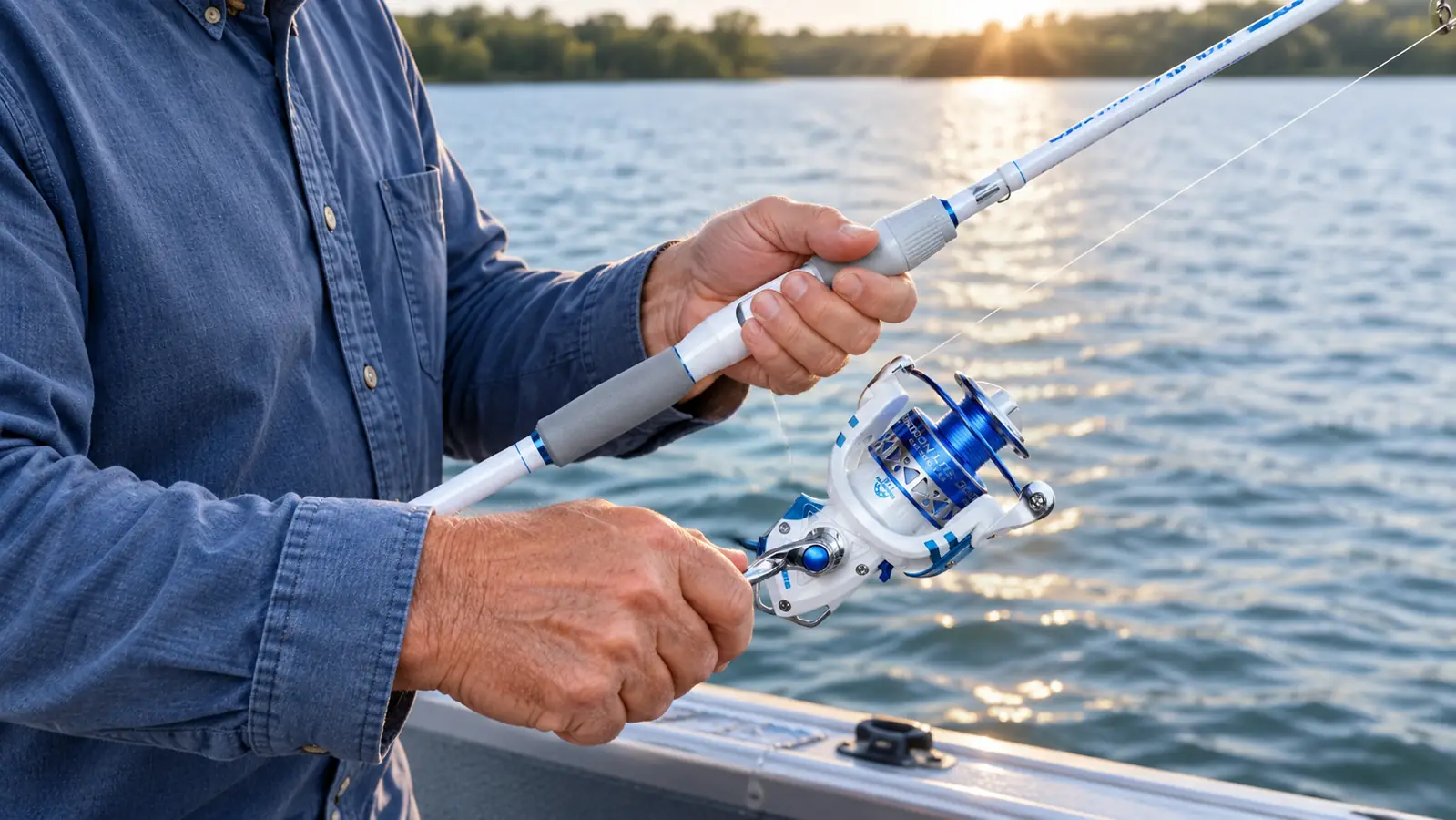
A spinning reel fishes the way it is spooled. Fill it too far and the line jumps off in loose loops every third cast. Fill it too little and you lose distance, and you will spend the morning wondering why the fish are out of reach when they are not.
The 2000 reel on this combo is rated 20/200 on the spool, and the listing calls for braid. On a bayou I want the spool filled to within about an eighth of an inch of the lip, no more than that. I run a backing of old monofilament on first so I am not buying braid to fill a whole spool, then I wind the braid on under tension with a pencil through the filler spool and my thumb pinching the line just ahead of the guide. If the line going on feels slack, it will come off slack.
Line weight on this rod is listed at 10 pound or higher, and I stay near the bottom of that range. Ten or fifteen pound braid will land a crappie and will still turn a bass out of a laydown. Set the drag by pulling line off the spool with your hand before you ever make a cast. If it comes off with a hard jerk, it is too tight, and a tight drag on a medium blank will pull hooks out of a paper-mouth crappie all morning long. The KastKing reel has a drag you can set by feel in about ten seconds. Do it at the ramp, not after the first fish.
Step 2: Read the bayou before you make a cast
Most people start casting the second the trolling motor goes down. I do not. I idle past the first hundred yards of water and look at it.
On a bayou, fish sit on edges, not out in the middle of nowhere. The edge might be a grass line where the hydrilla stops. It might be the seam where a ditch dumps muddy water into the main channel. It might be the shade under a cypress at nine in the morning. In spring the crappie are on the shallow end of a laydown. By June they have backed off to the deeper side of that same laydown, and the bass have moved onto it. Same piece of wood, different fish, different depth, and the difference is worth knowing.
I look for three things. A color change in the water. Any hard structure that breaks the current. Shade. Find two of the three in one spot and you have found a place worth ten minutes of your morning. Mark it in your head against a landmark on the bank, because the trolling motor will turn you around twice and after that the bank all looks the same.
One more thing on this. A bayou that looks empty is usually not empty. It is just that the fish are stacked on four or five pieces of cover in a mile of water, and the rest of that mile is a whole lot of nothing. Reading the water is how you find the four or five instead of fishing the nothing.
Step 3: Learn the sidearm cast and quit casting at the sky
Bayous are not lakes. There is a tree over your head most of the time, and a high overhand cast puts your lure in that tree about one cast in five. I have donated enough tackle to those trees to know.
The cast I use is a low sidearm, almost a roll cast, the rod tip kept below shoulder height, the lure released flat and close to the water. A 6 foot 6 inch rod is easier to do this with than a 7 foot rod, because there is less tip to catch a limb on the back cast. The split rear handle on the shorter Centron Lite models puts the reel closer to your hand, and that makes a short, wristy cast feel natural instead of clumsy. That is not a small thing when you are making it two hundred times a morning.
Practice it in open water first. Ten casts at a coffee can lid thirty feet out. When you can drop it there with the rod tip low, take it into the trees. The other half of this is quitting while you are ahead. Do not rip a hung lure out of a limb. Point the rod at the bait, take up the slack, and pull straight back until it pops free. Ripping it costs you a rod tip and half a morning, and the trees always win.

Step 4: Fish two speeds, not two moods
Crappie and bass in the same bayou want opposite things from a lure. Crappie want it slow, small, and hanging in front of their face. Bass want it moving, and they want to be surprised by it.
For crappie I fish a small jig under a slip cork, or a plain jig on a slow lift and drop. Cast it to the edge, let it fall, count to five, lift once, let it fall again. Most crappie I catch hit it on the fall while I am doing nothing at all. The medium blank has enough give that a paper-mouth does not tear off, and the 5.2:1 gear ratio retrieves slowly enough that I can crawl a jig through the strike zone instead of pulling it past the fish before they can decide.
For bass I change the lure, not the rod. A small spinnerbait, a Texas-rigged worm, a lipless crank, something I can burn along a grass line. Same combo, same reel, same line. Cast, count it down two beats, reel it back at a steady medium clip. If a bass follows and will not eat, speed it up. If he eats and comes unbuttoned, check the drag and ease off the hookset instead of swinging for the fence. Nine times out of ten the fish that comes off is a drag problem or an over-eager hookset, not a dull hook.
Two speeds, one combo. That is the whole reason to carry it.
Step 5: Change the rod before you change the lure
The mistake I made for years was trying to make one rod do a job it was not built for. A medium power rod with 10 to 15 pound line is right for a jig, a worm, a small spinnerbait, a topwater. It is not right for dragging a big creature bait through thick hydrilla, or pitching into a brush pile you intend to winch a fish out of.
When you find yourself wanting heavier line, heavier weights, and a hookset that feels like setting a fence post, the rod is telling you something. The KastKing Centron Lite line runs from 6 foot up to 7 foot 6 inches, and the 7 foot 6 inch medium heavy models use a full length EVA handle instead of the split rear grip, because that is the handle you want when you are working a big fish around cover. The larger reel sizes in that line are made for those rods. If that is the water you fish, buy that rod. Do not force the 6 foot 6 to do it and then blame the rod when it will not.
What I will say is this. On a bayou, most days, the medium rod is the right rod. The heavy stuff is for grass mats and laydowns out on the lake. Know which one you are fishing before you leave the house, and you will stop cussing tackle that was never meant for the job.
What Else Helps
A rod and reel do not catch fish by themselves. A few things in the boat make more difference than the tackle does.
Wear the life jacket. Kaylee wears hers from the ramp to the ramp, and so do I. A 16 foot aluminum jon boat on a bayou, with a trolling motor running and cypress knees just under the surface, is not a place to get casual. Put it on before you push off, not after the first wake rocks you sideways.
Carry a landing net, a pair of long-handle pliers, and a soft bag with three boxes instead of eight. I used to carry everything I owned and I spent half my morning looking for a lure I knew I had. Now it is a jig box, a worm box, and a box of hard baits. I fish better because I am not digging.
Rinse the reel with fresh water and back the drag off after every trip. That is it. A 5.2:1 spinning reel is a simple machine and those two habits will get you years out of it. Check the line for nicks above the lure every so often and cut back a foot when you find one. Braid does not rot, but it does fray, and a frayed spot is where your fish leaves.
And tell somebody where you launched and when you plan to be back. That is not gear advice, but it is the advice I would give first if you asked me on the ramp.
Fill the spool to within an eighth of an inch of the lip, set the drag by hand at the ramp, and a 2000 reel at 5.2:1 on a medium IM6 blank will do everything a north Louisiana bayou asks of it.
One rod, two jobs, and it fits behind the truck seat
Two-piece IM6 graphite blank, 6 foot 6 inches, medium power, ambidextrous spinning reel at 5.2:1, EVA grips. If your boat is a jon boat and your water has trees in it, this is the size that makes sense.
Amazon Check Today's Price on Amazon →