
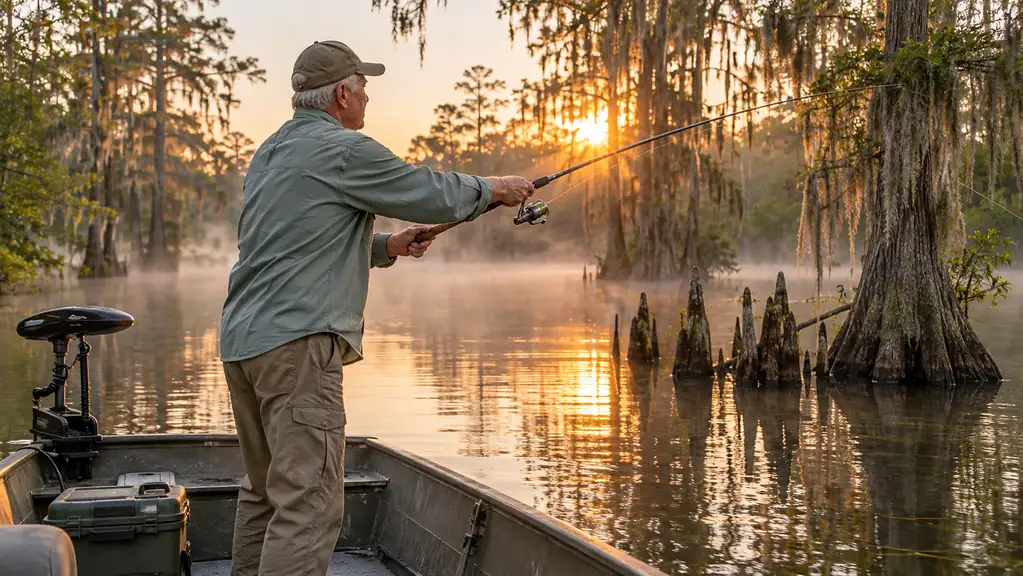
The KastKing Centron Lite does not look like much coming out of the tube. Two rod sections, a second tip, a small spinning reel, and a handle that feels lighter than it has any right to. I have fished combos that felt heavier and deader in the hand on the very first cast, so I did not form an opinion in the driveway. I spooled it, put it in the rod locker of my jon boat, and let a whole season do the deciding for me.
I am 63 and retired off pipeline welding, and I fish bass, crappie and catfish on the lakes and bayous around north Louisiana out of a 16-foot aluminum jon boat with a small outboard and a trolling motor. Nobody pays me to like anything. What follows is the honest version of the KastKing Centron Lite: what it does well, where it lets you down, and the two or three things I wish somebody had told me before I tied on a lure.
The Quick Verdict
A light, sensitive 6'6" medium combo with a 2000 reel that punches above its class on the water and shows its seams after a hard season. Buy it for the blank. Expect the reel to be the first thing you want to upgrade.
Amazon Check Today's Price →The blank is worth the money. Check today's price and see for yourself.
A 6'6" medium on an IM6 graphite blank with a 2000 spinning reel, ambidextrous, rated for braid. It is the rod I keep handing to my granddaughter.
Amazon Check Today's Price on Amazon →What You Actually Get
The combo I fished is the 6'6" medium paired with the 2000 size reel, and the rod measures 78 inches tip to butt. The blanks are IM6 graphite and every combo is two-piece. The lineup runs from 6 feet to 7'6" with reel sizes from a compact 2000 up to a 4000. The 6 foot through 7 foot all-purpose combos use a split rear handle, and the 7'6" medium heavy uses a full-length EVA handle. Mine is the split rear version, and I am glad of it.
The reel is ambidextrous, which matters more than most people admit. I cast right handed and crank left, and I have handed this rod to a right-hand-crank friend and to my granddaughter without changing anything but the handle position. Gear ratio is 5.2 to 1. Line capacity is listed as 20 pound braid over 200 yards, and it is built for braid of 10 pound test or heavier. The frame and internals are aluminum and stainless steel.
In plain language, this is a medium power spinning outfit meant for bass and for anything else that eats a lure in that weight range. It is not a heavy cover rod and it is not a surf rod. If you treat it like one, the fault is yours and not the rod's.
How I Used It
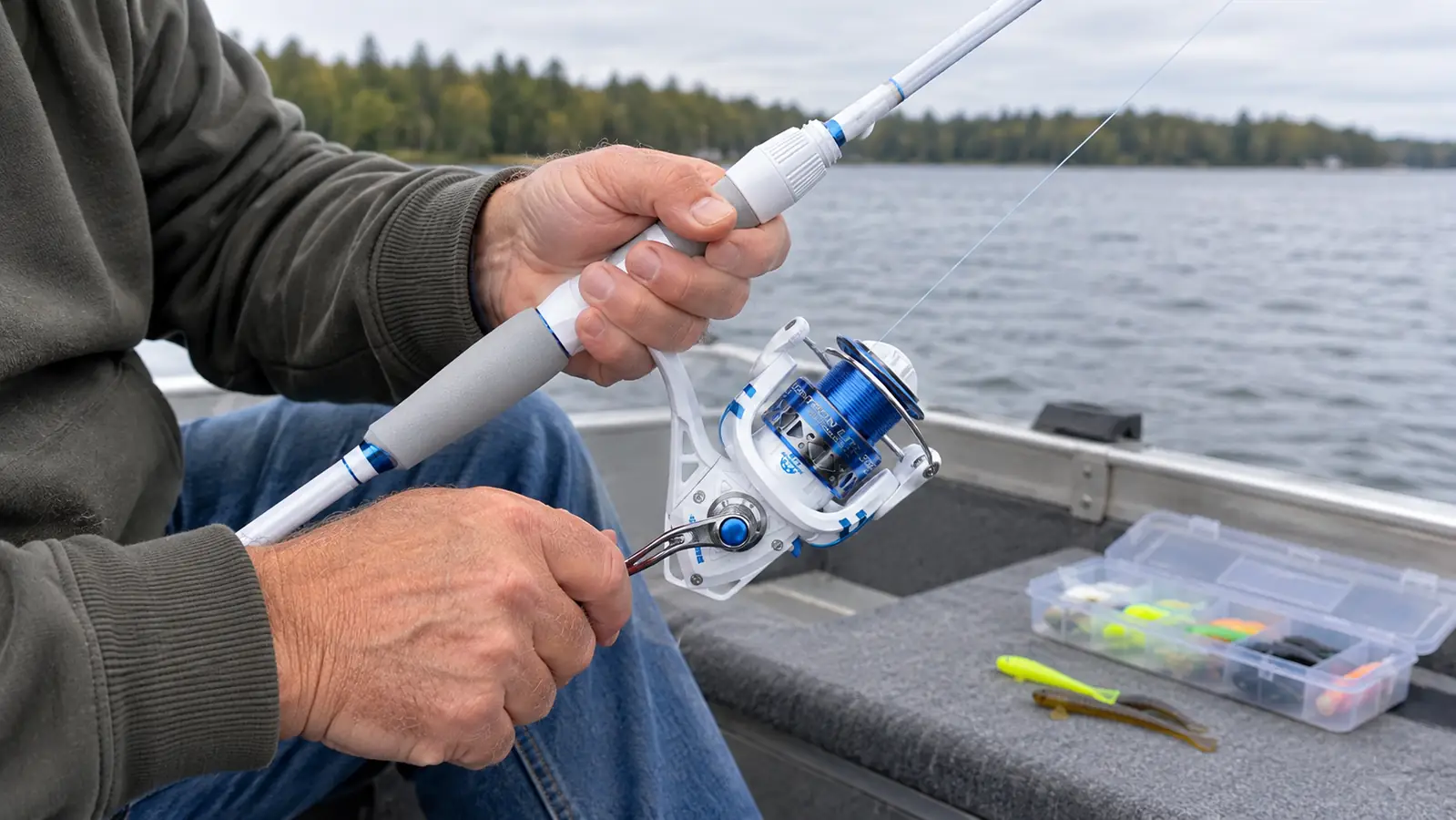
From April through the end of October it stayed rigged in the boat. I threw weightless soft plastics around cypress knees, a spinnerbait along grass edges, small crankbaits over shell beds, and a slip float for crappie when the bass sulked in the heat. It rode in the truck bed under the toolbox lid on two trips down gravel lease roads and it came in and out of that rod locker sixty or seventy times.
One morning in early June sticks with me. The water was still and the bass were up shallow on a flat where a bayou bends past a stand of willow. I made maybe forty casts with a weightless stickbait, working it slow, and the rod loaded and unloaded cleanly enough that I could follow the lure ticking off the top of a submerged log at fifteen feet. When the fish finally took it, the tip told me before my hand did. That is not a thing that happens with a heavy, dead blank, and it is the reason I quit carrying a second rod on those short morning trips.
The rod also became the one I hand to Kaylee, my 11-year-old granddaughter, when she fishes with me on weekends. She wears a life jacket every single time she steps into that boat, and that is not a subject open for discussion, same as it was with her daddy. A light combo matters there. A 6'6" medium with a 2000 reel is about as much rod as a kid that size can work all morning before she gets tired of it.
I also fished it from the bank a couple of evenings a week at a pond near the house, casting a Texas rig at the same two stumps like a stubborn old man. That is where a rod shows you whether the blank is any good, because from the bank you feel everything through the rod and nothing through a graph.
What Nobody Tells You Before You Buy
The first thing is that the rod is the reason to buy this combo and the reel is the reason to think about it. Out of the box the 2000 is smooth enough, it casts a light lure better than a reel at this level has any right to, and the drag has been steady and predictable all season. But the reel is the part that will eventually tell you what this outfit costs, and it started telling me in August.
The second thing is that the twin tip is a second tip section, not a second rod. I fished the same tip all season and left the other one in the truck as insurance, which turned out to be smart after I chipped a guide against a rod locker latch in May. If you are expecting the extra tip to turn this into a flipping stick for heavy cover, adjust that expectation before you order.
The third thing nobody mentions is the split rear handle and the EVA foam. A split rear grip puts blank in your hand, which is a large part of why this rod feels more sensitive than it has any business being. EVA foam is comfortable and it is also a sponge for fish slime, sunscreen and lake water. By September mine had a sheen on it that took dish soap and a scrub brush to get off. Neither of those is a defect. Both are things to know.
What Held Up
The blank is the star of this outfit. IM6 graphite in a 6'6" medium is not exotic, but KastKing has it balanced well. A quarter ounce jig head with a small swimbait loads the tip on a short cast, and I could feel a bass tick it on a slack line in eight feet of water. That is the whole test, and this rod passed it more often than I expected it to.
To put it in numbers, my best stretch came in late July over a shell bed in about nine feet of water, dragging a Texas rig with a quarter ounce weight. I boated eleven fish in under two hours, most of them in the one to two pound range, and I felt every one of them tick before I ever moved the rod. The same bait on the heavier fiberglass rod I keep as a backup felt like dragging a sack through mud. Side by side in the same boat, same morning, same lure, and there was no argument left to have.
The guides have survived a season of braid, which chews up cheap guides in a hurry. The reel seat has not loosened on me. The handle has not come loose and the foam has not split. The rod has lived through the rod locker, the truck bed, one dropped tackle box, and a clumsy Lab named Boudreaux who has never once accepted that a rod is not a stick.
The drag gets its own paragraph. A five pound bass in current will test a 2000 size drag, and I had a fish on a crankbait in May that pulled drag twice and never got the better of it. It did not slip, it did not stutter, and it came back smooth after being stripped. Worth saying out loud, because the small reel in a combo package is usually exactly where the corner gets cut.
What Did Not Hold Up
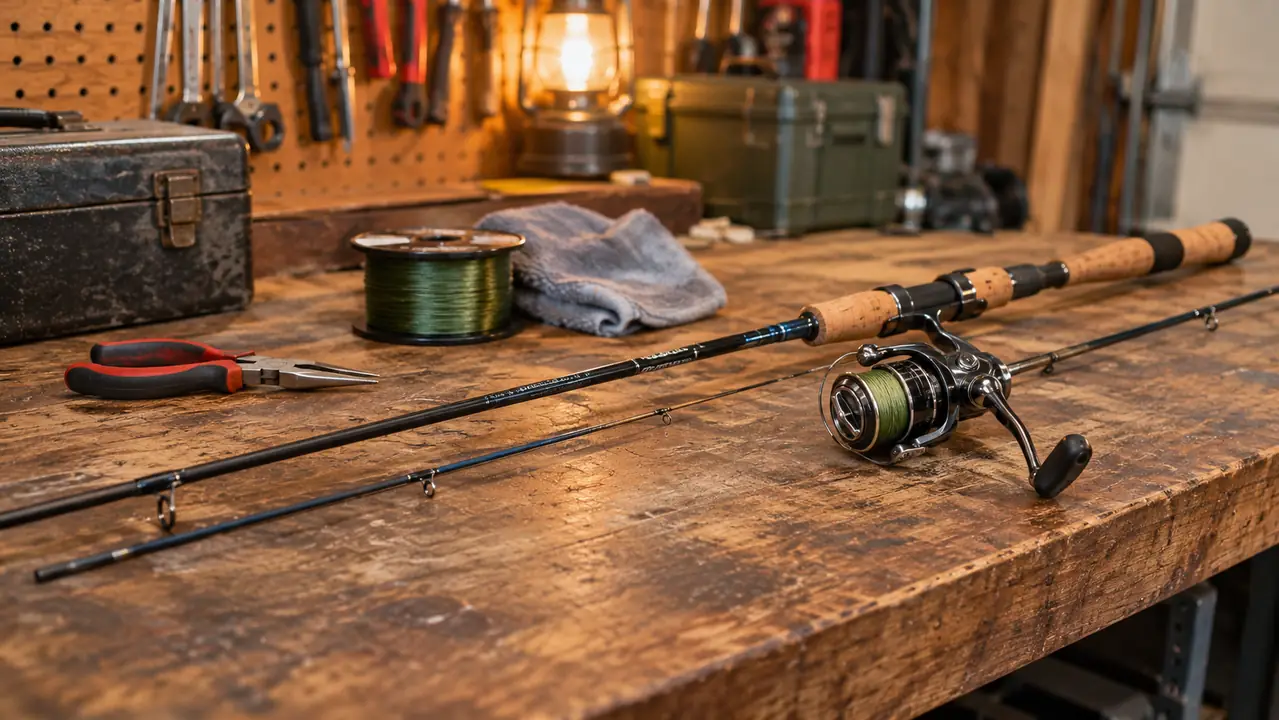
The handle. Around August the reel handle developed a small amount of side to side play that was not there in April. Not enough to affect how it fishes, and I have not had to put a tool to anything, but the reel is no longer as tight as it was new. The 5.2 to 1 gearing still feels the same under load, so I am calling it cosmetic for now and keeping an eye on it.
I found it on a Tuesday evening at the pond, sitting on the tailgate respooling in the last of the light. The rod was laid across my knees while I threaded line and I rocked the handle side to side out of nothing but boredom and there it was. Maybe a thirty-second of an inch of slop at the knob. It has not grown much since August, and there is nothing on the outside of the reel to put a wrench on anyway. If it gets worse by next spring I will say so, and if it does not, then calling it cosmetic was the right call.
The anti-reverse has a hair of slack before it catches. You notice it when you set the hook on a soft plastic and the handle gives a quarter inch before it locks up. It has not cost me a fish and I do not expect it to. It is the kind of thing that separates a reel at this level from one that costs considerably more, and if you fish every week you will feel it by midsummer.
Line capacity is honest and also limiting. Twenty pound braid over 200 yards is plenty for bass in a bayou and plenty for crappie and pond fish. It is not plenty if something big decides to run, which is why I would not take this 2000 reel into saltwater or chase big river catfish with it. The rod is medium and the reel is a 2000. Respect that and you will be fine. Fight it and you will get spooled and then tell everybody the reel was bad.
The foam gets slick. I said it earlier and I will say it again, because in July with sunscreen on your hands and a fish flopping on the deck, a slick grip is the difference between landing it and telling a story about the one that got off. I keep a rag in the boat now and wipe the handle down every couple of hours. That is a cheap fix, not a reason to skip the combo.
How I Would Set It Up
I spooled mine with 15 pound braid, which sits inside the listed 20/200 capacity and leaves a little room on the spool instead of filling it to the lip. The reel is built for braid and the rod is rated for 10 pound or heavier, so braid is the right call for soft plastics and small crankbaits. If you insist on monofilament, go lighter than the reel's listed capacity and expect less distance.
Set the drag by hand before you ever make a cast. Tie off to a post and pull until the spool gives a little, then back it off a quarter turn. I run mine light enough that a good hookset will not straighten a light wire hook, and I have not lost a fish to a locked down drag since I started doing that. It takes two minutes at the tailgate and it saves fish.
I keep a short piece of dowel in the truck toolbox for setting drag on the water. Loop the line around it, hold it out in front of you, and pull. If the spool gives line under steady pressure with no jerking, you are close. If it takes two hands and a grunt, you are too tight and a light wire hook will straighten on the first good fish of the morning. I learned that the expensive way on a different reel years ago, and this one has never been over-tightened since.
Check the ferrule joint every trip. A two-piece rod that works loose will rattle and eventually crack at the joint, and that is true of every two-piece rod ever made, not just this one. I twist mine together firmly and check it again after the first dozen casts. And wipe the foam down with dish soap and warm water every few trips instead of waiting until the end of the season like I did.
What I Liked
- IM6 graphite blank in a 6'6" medium is light and genuinely sensitive through the split rear grip
- 2000 size reel is ambidextrous and casts light lures well for the class
- Drag was smooth and predictable through a full season, including on a five pound bass
- Two-piece breakdown fits in a truck bed toolbox and a small boat rod locker
- Second tip section on hand as a spare after a chipped guide
- Rated for braid at 10 pound test or heavier, with 20/200 line capacity
Where It Falls Short
- Reel handle developed side to side play by late summer
- Anti-reverse has a small amount of slack before it locks
- EVA foam grips get slick with sunscreen and fish slime
- 2000 spool capacity is limiting for anything that runs or for saltwater
- Not a heavy cover rod, despite what the twin tip name might suggest
A five pound bass pulled drag twice on this 2000 reel in May and never got the better of it. That is the sentence that matters most in this review.
Who This Is For
If you fish ponds, bayous, small lakes and river backwater for bass and crappie, this is a sensible outfit to keep rigged and ready. It is light enough that an 11-year-old can cast it all morning and it is sensitive enough that an old man on the bank can feel a tick on a slack line. The 5.2 to 1 ratio is a good working speed for crankbaits and for dragging a worm slow, and the ambidextrous reel means anybody in the family can pick it up.
It is also a fair choice as a second rod in the boat for somebody who already owns good tackle and wants a spare that does not hurt to leave in the truck. KastKing built this one around the blank, and the blank is the part you will still be using in five years.
Who Should Skip It
Skip it if you fish heavy cover, flip jigs into matted grass, or chase big fish in current with any regularity. The rod is medium power and the reel holds 20 pound braid over 200 yards. That is a bass and crappie outfit, and pushing it past that is how people end up writing angry reviews about a product that was never built for what they were doing.
Skip it if you want one combo to be your everything rod for the next decade and you fish forty weekends a year. The reel will be the limiting factor, and you will notice the handle play and the anti-reverse slack sooner than I did because you will be on the water twice as often. Buy the combo for the blank, plan to move the reel down the line later, and you will be happy with it.
One season in, I would buy it again for the rod alone
6'6" medium on an IM6 graphite blank with a 2000 ambidextrous reel, rated for braid of 10 pound test or heavier. It has earned a permanent spot in the rod locker.
Amazon Check Today's Price on Amazon →