
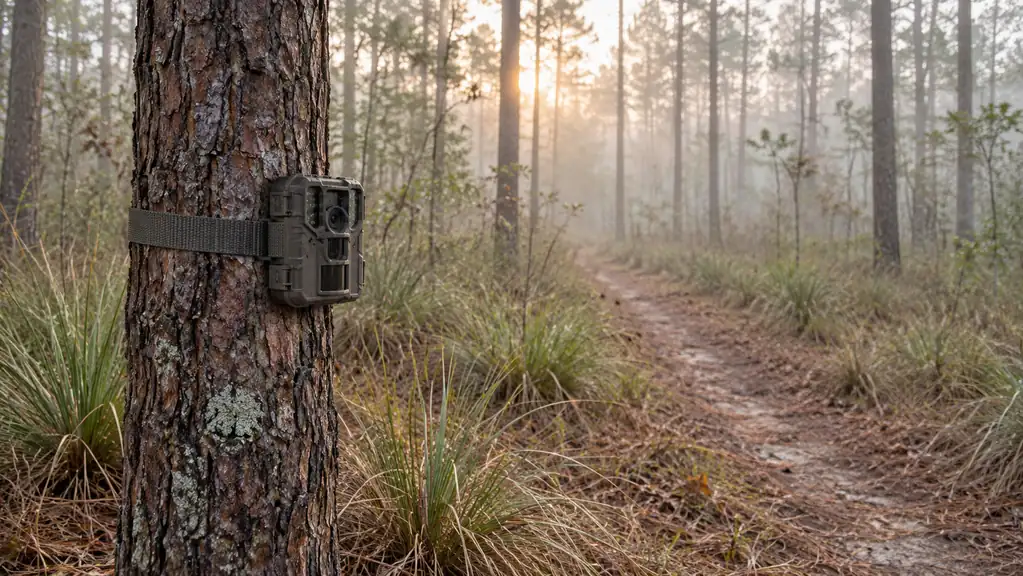
Deer season opens and half the lease is still guessing. That is the part I never understood. Folks will spend an afternoon hanging a stand in a spot they picked back in July off a hunch, then act surprised in November when nothing walks through it. I have done it. I hung a ladder stand over a rub line three years back that looked like a sure thing and saw two does in nine sits.
The fix is not expensive and it does not require cell service. It requires knowing what is walking your ground when you are not there. I run a WOSPORTS trail camera on a family lease in north Louisiana and have for two seasons now, through the heat, the hurricanes, and one particular coon with a grudge. There are ten reasons it has earned a permanent spot in the toolbox of my truck rather than the shelf in the shop. Two reasons it has not. Here they are in the order they actually mattered to me.
See what is walking your lease before the season opens
The WOSPORTS Trail Camera runs on batteries, needs no cell plan, and stores photos on a card you pull out yourself. That is the whole pitch.
Amazon Check Today's Price on Amazon →It tells you the stand is in the wrong place before you waste a season learning it
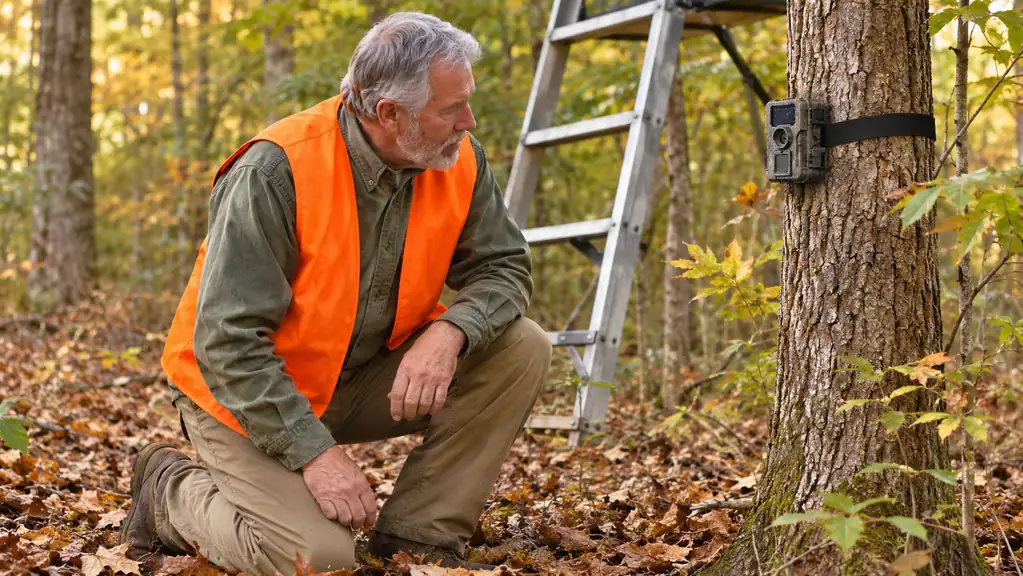
This is the reason the rest of the list exists. A camera hung in July on a scrape line tells you by August whether deer are using that travel route in daylight or only at 2 in the morning. I moved one stand about forty yards after a month of photos showed everything moving past a saddle instead of the ridge I had picked. Two weeks of scouting saved me nine sits of staring at nothing. There is no substitute for that information and no way to guess your way to it.
Sixty-four megapixels lets you count points instead of arguing about them
The camera shoots 64MP photos and you can dial that down to 5, 16, 36, 48 or 56MP if you want smaller files. I run mine at the high end for a simple reason: on a buck a hundred yards off in grey light, resolution is the difference between knowing what you are looking at and hoping. I have zoomed into a photo of a nine-point and counted every point on the left side. That matters when your son-in-law has opinions.
A 0.2 second trigger catches the deer that walks past instead of posing
Most blurry trail camera photos come from an animal crossing in front of a slow sensor. This one fires in 0.2 seconds, and the 120 degree wide angle means the deer does not have to walk into the center of the frame to get caught. On the trail behind my stand the deer come through at a steady walk, and I get them nose to tail instead of a rear end leaving the picture. The 1 to 3 burst mode gives you a short sequence too, which is how you tell a buck from a doe in bad light.
No-glow night vision that does not spook what it photographs
The infrared light source on this camera is the no-glow kind, which is why I am comfortable leaving it on a bedding approach. The old camera I ran before this one had a visible red glow at night and I am convinced it educated a mature buck on that ridge. Infrared flash still is not invisible to every animal, so I hang mine high and pointed down a trail rather than straight at a bed. But no glow at all is a real improvement over a faint red blink.
Two-inch screen on the camera means you do not need a laptop at the truck
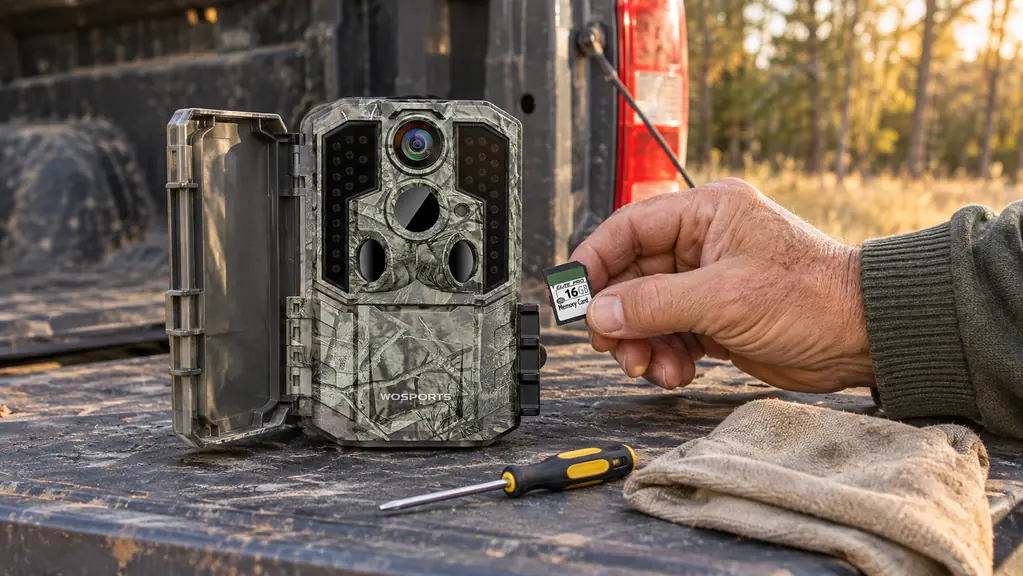
The camera has a 2 inch color LCD screen, so you can look at what you got standing right there in the woods instead of pulling the card and driving home to find out. I pull the card, drop it in, flip through the last few days, and decide on the spot whether to move the camera or leave it alone. In January with a north wind that is worth something. It also means I check less often, because I am not making a second trip to review photos.
One less subscription in your life, and that is the whole point
This is the non-cellular, non-WiFi version. It does not send photos to your phone. It does not want a data plan, a monthly fee, or an app. It takes a card and it takes batteries, and that is the arrangement. I have a cell camera too and I like it on a travel corridor I cannot reach often, but I got tired of paying for a plan that mostly sent me pictures of the same three does. On ground I can walk to, this is the one I hang.
Waterproof enough for a Louisiana summer that would ruin most electronics
The housing is rated waterproof and mine has sat through two summers of afternoon thunderstorms and one tropical system that dropped a foot of rain. No fogged lens, no water in the battery compartment. I still run a strip of tape over the top seam and I still hang it under limb cover, because a waterproof rating is a promise about rain and not a promise about sitting in a puddle. But a camera that survives August down here has done something.
Battery life that gets you to the season without a mid-summer trip
It runs on batteries, 8 volts, and mine has gone from June to October on one set in a shaded spot. That is the second thing that earns a camera a permanent spot. A camera that eats batteries is a camera you stop checking, and a camera you stop checking is a camera hanging in the woods doing nothing. The night photos are what drain it, so if yours is on a field edge taking fifty infrared shots a night, expect to swap sooner than I do in the timber.
It mounts on a tree or a wall with one strap and no tools worth carrying
The mount is a simple strap arrangement, tree mount or wall mount, and it goes on a pine trunk in under a minute. That sounds like nothing until you are hanging three cameras on a ninety-degree afternoon with sweat in your eyes. No tripod thread to strip, no bracket to lose in the leaves. I carry a small screwdriver for the card door and that is the entire toolkit. Easy to install is on the spec sheet and for once the spec sheet is telling the truth.
You can use it for more than deer, which is how it stays out of the shop
Mine comes inside in the off season and goes on the shed behind the house. It is motion activated and it does not need anything but batteries, so it works as a plain security camera for a driveway or a gate. A neighbor borrowed it for a week to figure out what was getting into his feed room. That kind of second job is why I do not begrudge the thing a spot in the truck. Gear that only does one thing tends to get left behind.
What I'd Skip
Two honest gripes, because a list of ten good things with no bad ones is not a review, it is a brochure.
First, the control method is a push button setup you work on the camera itself, and the photos come off a card you physically pull. If you are the kind of hunter who wants a buck on your phone at first light while you are still in bed an hour away, this camera will frustrate you. That is a cellular camera's job and you should go buy one of those instead. Second, the picture quality at night is not the same as daylight. Sixty-four megapixels in good sun is genuinely sharp. At 2 in the morning on infrared, it is good enough to identify an animal and not much more. Any camera at this price is going to be that way, but nobody should expect otherwise.
One more thing, and it is not a knock on the camera. A card full of photos is not scouting. If you pull a card, look at a nice buck, and change nothing about how or where you hunt, you bought a very expensive photo album. The camera only pays off if you act on what it tells you.
Two weeks of photos saved me nine sits of staring at nothing. That is the whole return on a camera like this.
Something worth saying plainly: check your local regulations before you hang a camera on public ground. Some wildlife management areas restrict them, some require them to be marked with your name and license number, and the rules change. On our lease it is simple, but public land is not our lease and I have been checked before. Read the pamphlet, not a forum.
Who Should Buy Which
If you hunt ground you can walk to, even once a month, and you want to know what is using it without paying a monthly bill, this is the camera for the job. It is also the right pick if you are setting out three or four cameras on a budget and cannot afford a plan on each one. The WOSPORTS does the scouting work and asks nothing after you buy it.
If your lease is four hours away and you get there twice a season, go cellular. You will pay for the plan and you will not regret it, because the whole value of a camera you cannot reach is getting the picture without the drive. Different tool, different job. Buying this one and then being annoyed it does not text you is like buying a wrench and being annoyed it will not drive a nail.
Hang it in July. Know your deer by October.
No plan, no app, no subscription. Batteries and a card, and it gets you through the season.
Amazon Check Today's Price on Amazon →