
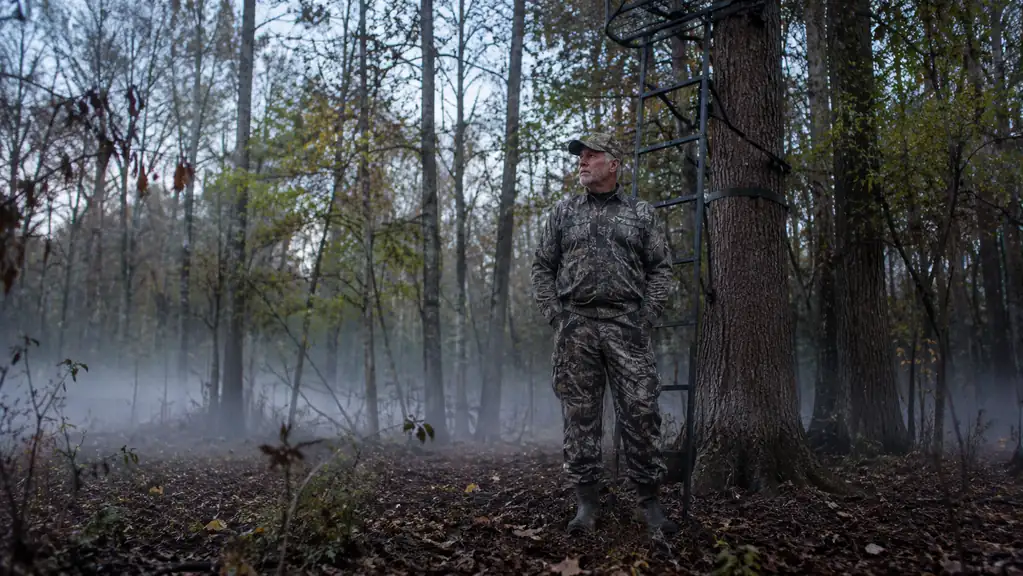
I bought my first tree stand harness in 1994 and I wore it about four times before it went into the toolbox and stayed there for a decade. That is the honest truth and I am not proud of it. When you are thirty-something and you have been climbing the same pine for years without incident, a harness feels like a seatbelt on a tractor. In the way. Until the morning it is not.
I am 63 now, I have a granddaughter who fishes with me on weekends, and I climb slower than I used to. Last September I strapped on the MUDDY padded nylon harness for the bow opener on our family lease and I did not take it off again until the season closed in January. This is what that season taught me, including the parts I did not care for.
The Quick Verdict
A light, genuinely comfortable harness that a man my age will actually keep on for a four-hour sit. The leg straps take some fiddling and the hand-wash instruction is a nuisance, but it does the one job that matters.
Amazon Check Today's Price →The harness I now keep in the truck instead of the toolbox
Two pounds of padded nylon, rated to 300 pounds, one size, and a quick-release design that goes on over a jacket without a wrestling match. Check the current price before your season opens.
Amazon Check Today's Price on Amazon →How I've Used It
Our lease is about ninety acres of mixed pine and hardwood in north Louisiana, and my stand is a ladder stand on a ridge above a creek crossing. Nothing fancy. I climb in around 5:40 most mornings during the October muzzleloader and the November rifle season, sit until nine or ten, and climb back down. Some afternoons I am back in the same tree by three and out at dark. That is a lot of time in a harness between September and January, and I wore the MUDDY harness on every sit.
I keep a log of sits in a spiral notebook in the truck, mostly to remind myself where I saw deer and what the wind was doing, and I went back and counted it up for this piece. Forty-one sits. Nineteen of those were mornings, twenty-two afternoons. The longest was four hours and twenty minutes on November 14, when a front was pushing through and I did not want to climb down and spook what was moving in the bottom. The harness was on for every minute of that and I did not think about it once after the first thirty seconds.
I put it on in the truck bed before I walk in, not at the base of the tree. That was deliberate on my part. I wanted to know whether the thing was comfortable enough to wear on a half-mile walk through cutover, because a harness you only put on at the stand is a harness you will skip when you are running late. It passed that test. Two pounds of nylon and padding does not bother me walking, and it does not catch on privet the way a big vest-style system does.
For the record, I am about 5 foot 10 and I run around 205 pounds in November, more like 212 by the time the holidays are done. The harness is one size, and it fit me at both weights. I tightened the shoulder straps once in early December and did not touch them again.
What the Padding Actually Does on a Long Sit
The single reason I stopped wearing my old harness was not the buckles or the straps. It was the seam on the shoulder straps digging into my collarbone after about ninety minutes. By the second hour of a sit I would be shifting around, and shifting around in a ladder stand is exactly the behavior you do not want.
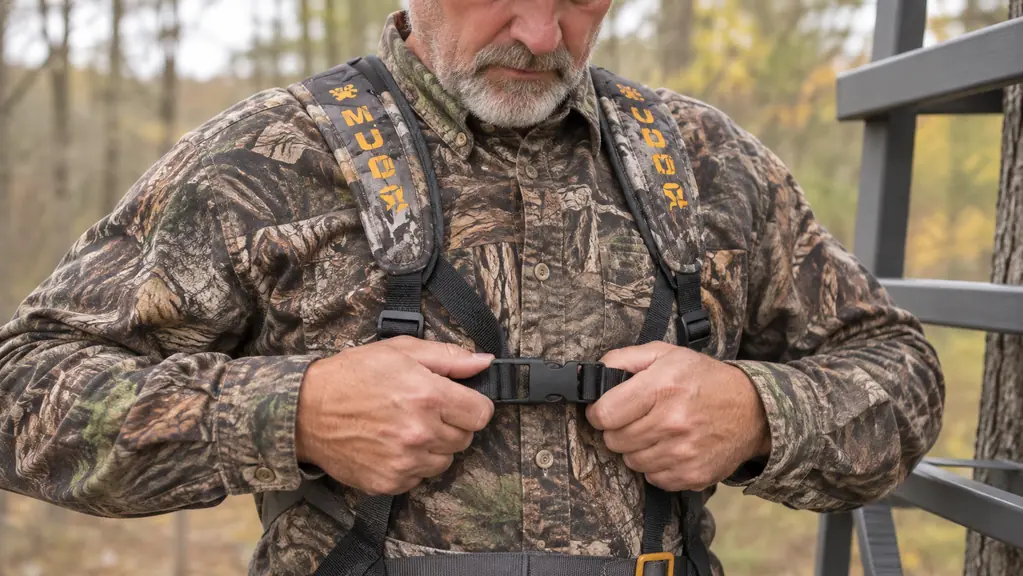
The MUDDY harness is padded nylon across the shoulders and around the waist, and that padding is the whole reason I kept it on past October. Four hours in the cold with a rifle across my knees and I was not aware of the straps. That is the standard, in my opinion. The best piece of safety gear is the one you forget you have on, because the one you notice is the one you take off when nobody is looking.
The real test came in early December. We had two mornings in the low thirties with a north wind running about twelve miles an hour, and I was in a ladder stand with no box around me. That is the weather that finds every weak point in a harness, because you are hunched and stiff and the straps pull in directions they never pull in September. I had a hooded sweatshirt, a fleece and a shell on, and the harness went over all of it without me having to loosen a single strap. I climbed down at nine-thirty both mornings and my shoulders were not sore.
The fabric is described as low stretch and lightweight, and that matches what I felt. It does not have the give of a soft nylon strap, which is good. Stretch in a harness is not a feature. When you lean back against the tether to test it, you want the harness to hold its shape and take the load where it is supposed to, not creep a half inch and let you sag.
Fit, Buckles, and the Adjustment That Took Me Three Tries
I want to be straight with you about the leg straps, because this is where I fumbled. The harness goes on over your clothes, which is the correct way to wear one, and the shoulder straps and chest strap came easy. The leg straps took me three mornings to get right. Too loose and the harness rides up when you sit. Too tight and you feel it in the crease of your hip on the walk in.
The first morning I tried to adjust them in the dark with a headlamp in my teeth, which is a fool's errand, and I walked in with the left leg strap looser than the right. I noticed it halfway up the ladder and had to come back down and start over. That cost me twenty minutes of gray light and a fair amount of my temper. The second morning I overcorrected and snugged both a notch too far, and I felt it by the time I crossed the creek. The third morning I got it. Now I put it on in the yard, in daylight, in the coat I plan to hunt in, and I have not fooled with it since.
Once I found the right setting, I marked it with a paint pen and stopped thinking about it. My advice is to do that adjustment at home, in the yard, with your hunting coat on, not in the dark at the base of a tree. Give yourself twenty minutes with it before the season. It is not difficult, it is just not something you want to be learning at 5:30 in the morning.
The quick-release design is the part that sold me, because I climb down in the dark more often than I climb up in it. A harness you can get out of in a hurry, in the cold, with gloves on, is worth paying for. I tested that release with gloves a few times before I trusted it, and it worked every time, including one evening in January when my hands were so stiff I could barely feel the buckle.
Where It Held Up and Where It Showed Wear
Forty-one sits in Louisiana weather is a fair test. That means rain, that means humidity that does not quit until December, and that means sweat on the walk in even when the temperature is in the forties. The nylon did not fray at the buckle contact points, the stitching at the shoulder junctions stayed put, and the padding did not flatten out or get that sour smell that cheap foam gets.
One thing I did not expect: the shoulder straps held their adjustment all season. My old harness would creep loose over a couple of weeks and I would have to re-tighten it, usually in the dark, usually already in the tree. This one did not. I set the shoulder straps on the second morning and marked the webbing with a paint pen, and when I checked that mark in January it was still where I put it. Small thing. It is also the kind of small thing that separates a harness you keep from a harness you quit on.
Here is the nuisance: hand wash only. I did not hand wash it during the season, and I will tell you right now that most hunters will not either. I wiped it down with a damp rag twice and hung it in the shop to dry. That is the realistic version of caring for this thing, and it came through fine. Just do not throw it in the washing machine with your camo and expect the webbing to stay honest.
The one thing I would flag is that one size does not mean one size fits everybody well. It fit me fine at 205 and again at 212. A man much wider across the chest than me, or a smaller-framed younger hunter, may spend more time on the adjustment than I did. That is a real limitation, not a deal breaker, but it is worth knowing before you order.
What I Liked
- Padding across the shoulders and waist is the difference between a four-hour sit and a ninety-minute one
- Two pounds total, so it goes on over a shirt or a heavy coat and does not snag brush on the walk in
- Quick-release buckles work with gloves on, which matters most when you climb down in the dark
- Rated to 300 pounds and the shoulder straps held their setting for the entire season
- Low-stretch nylon takes the load where it should instead of sagging when you lean back against the tether
Where It Falls Short
- The leg straps took me three mornings to dial in and are not set-and-forget the first time
- One size only, so a much wider or much smaller frame will fight the adjustment more than I did
- Hand wash only, and no hunter I know is going to hand wash a harness in the middle of the season
- Ships as the harness alone, with no tether, tree strap or lineman's belt in the box
- No pockets or gear carry, so you still need a pack for calls, rope and water
The best piece of safety gear is the one you forget you have on, because the one you notice is the one you take off when nobody is looking.
Safety Details That Matter More Than the Price
The harness is rated to 300 pounds, which is more than I will ever need and worth checking against your own weight plus coat, boots and pack. MUDDY backs it with a one-year limited warranty, and the box contains the harness itself, so read the listing before you climb. Mine came as the harness only, and I already had the tether and tree strap from my old system. If you do not, that is a separate purchase and you should make it the same week, not the same morning you plan to hunt.
I want to say one thing plainly, because I have seen men get this wrong. A harness is only as good as what it is connected to, and a ladder stand that has been hanging on the same pine for six years needs its straps checked before you trust it. I check the ratchet straps and the ladder joints every single season, and I replaced two straps last October that had gone stiff and chalky to the touch. The harness catches you. The stand is what keeps you from needing to be caught.
How It Compares to a Vest-Style System
I hunted out of a full vest-style system for years, the kind with shoulder pads and a big back panel and enough pockets for a man to carry a whole tackle box. It was comfortable in the tree, and it was miserable to walk in. Hot in September, bulky under a coat in November, and it caught on every limb between the truck and the stand.
The MUDDY harness is the other kind of tool. It is a harness, not a vest, and it does not try to carry your gear. I wear it over a shirt in early season and over a coat later, and it stays out of the way. If you want pockets, you already have a day pack. I carry my grunt tube, my rope and my water in a small pack and leave the harness to do harness work.
Who This Is For
This is for the hunter who climbs a ladder stand or a lock-on and wants a light harness that goes on over whatever he or she is already wearing, without a fight. It is for the man my age who has gotten honest with himself about climbing, and for the younger hunter who has not had a scare yet and would just as soon keep it that way.
It is also for the person who hunts out of a ground blind most of the season and only climbs a handful of times. A harness that takes thirty seconds to put on and does not need its own duffel bag is a harness you will actually bring on those four mornings. That is the whole argument, and it is a good one.
Who Should Skip It
If you want a system with a built-in lineman's belt, a tree strap, a suspension relief strap and pockets all in one package, this is not that. You will need to source the tether and strap, and if you are brand new to climbing, buying a complete system the first time may save you a trip back to the store.
Skip it too if one size is a genuine problem for your build, or if you refuse to spend twenty minutes in the yard adjusting leg straps before the season. A harness you have not fitted correctly is not much better than no harness at all. It will ride up, you will resent it, and it will end up in the toolbox like my first one did.
And if you are hunting from the ground this year, spend the money on a good pair of boots first. I mean that.
A season of four-hour sits says more than a spec sheet
Padded nylon, quick-release buckles, two pounds, rated to 300 pounds. If you are going to climb this fall, climb in something you will keep on past the second hour.
Amazon See the Current Price on Amazon →