
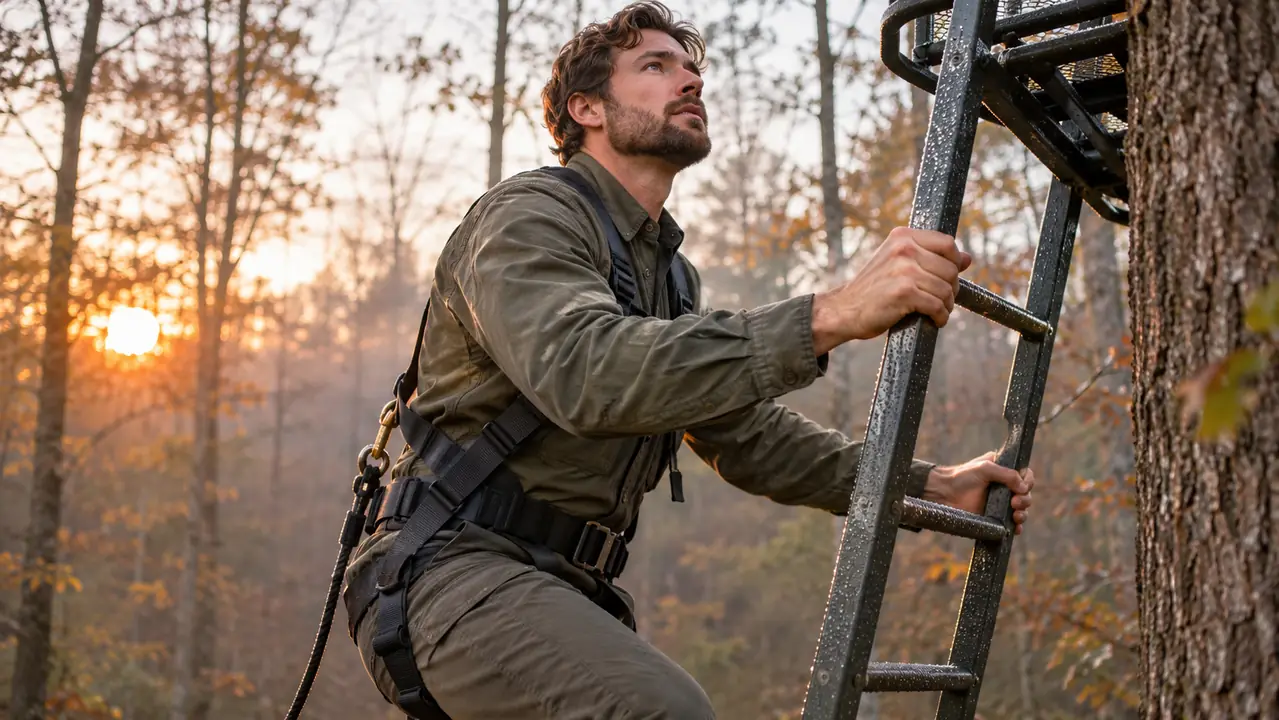
I climbed into a ladder stand for the better part of twenty years without a harness on my body. One hand on the rail, rifle slung over a shoulder, boot on the rung, and a private promise to be careful. That promise is worth nothing at 4:50 in the morning with frost on the steps and a headlamp bouncing off wet aluminum. What changed my mind was not a close call of my own. It was a welder I worked alongside out of a job in Mississippi, a man who had climbed the same ladder stand for a decade, who missed a rung on the way down in the dark and broke both heels and a wrist. He hunted again two years later. He climbed with a harness after that. So do I, and it has been eight seasons now.
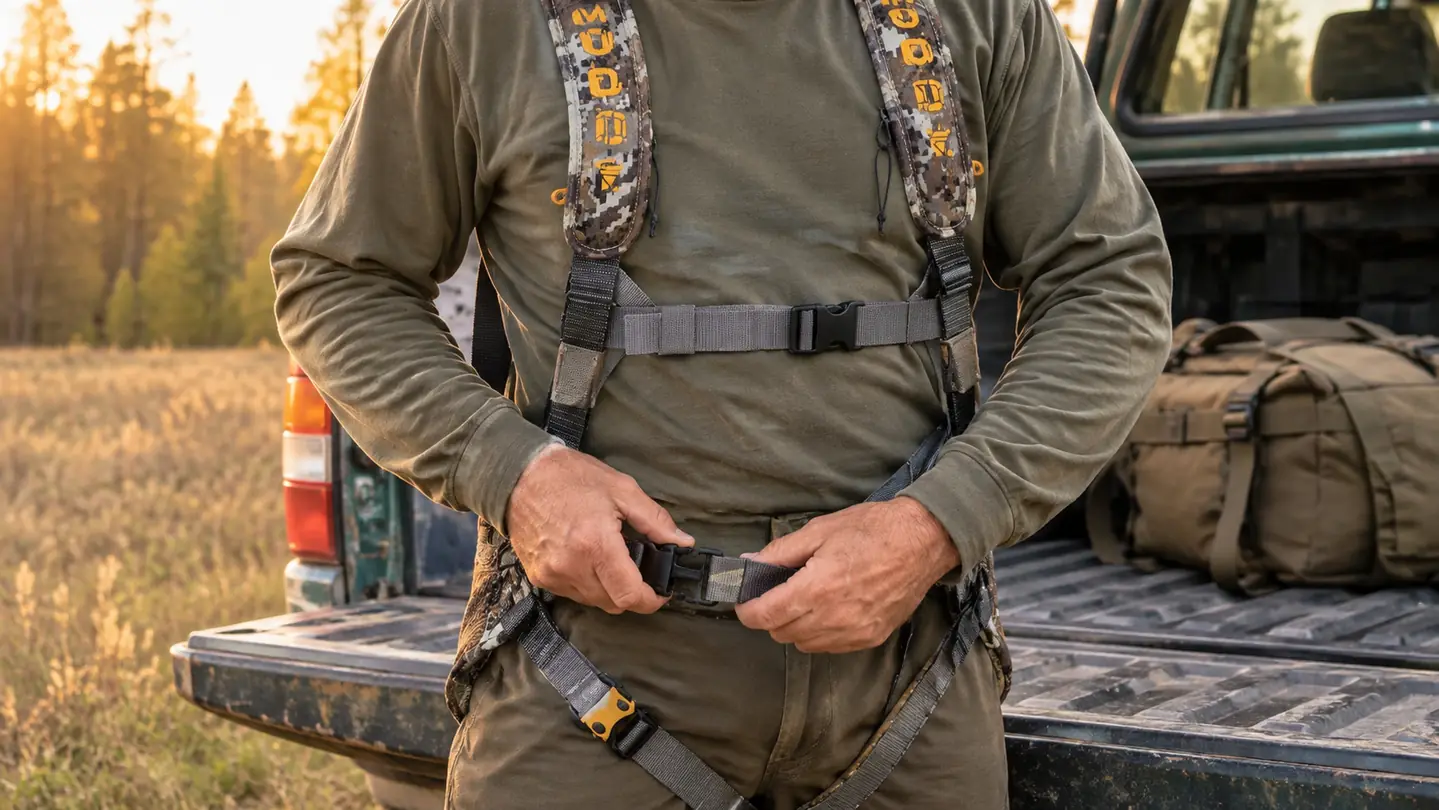
A padded nylon harness is not complicated gear. The one I wear, the MUDDY harness, weighs about two pounds, carries a 300 pound weight capacity, comes in one size with a standard fit, and uses quick release buckles so getting out of it is not a wrestling match in the dark. Low stretch nylon webbing, solid pattern, hand wash only, one year limited warranty. That is the whole spec sheet and it is enough. What matters is not the harness. It is the order you do things in. Most tree stand accidents I have heard about over forty five years were not equipment failures. They were sequence failures. A man unhooked before he reached the ground, or he climbed before he hooked up. Here is the order I use on every single climb.
Two pounds of webbing against a fifteen foot drop
The MUDDY harness rates to 300 pounds, adjusts to a standard fit, and weighs about what a full water bottle does. You put it on at the tailgate and forget it is there until the morning you are glad it was.
Amazon Check Today's Price on Amazon →Step 1: Inspect the harness in daylight, at the truck
Do this in the driveway on a Saturday afternoon with the harness in your lap and a cup of coffee going cold on the tailgate beside you. Not at the base of a tree at five in the morning with a headlamp in your teeth and a buck already moving somewhere off the ridge. The inspection takes four minutes and you cannot do it in the dark. I have done it in the dark and I know exactly what I missed, which was a frayed spot about the width of a thumbnail on one leg strap.
Start with the webbing. Run it through your hands an inch at a time and look for fuzz, cuts, sun bleaching, or a place where a rat chewed it in the shed over the summer. Look hard at every stitch line, especially where the straps turn under the padding, because that is where a bad stitch hides. Then the buckles. Open and close each quick release a few times and listen to it. If one sticks, or a side does not latch with a clean click, that harness is finished. Two pounds of nylon is not worth arguing with and it is not worth one more season.
Care matters more than people think. The tag says hand wash only and it means it. Mild soap, cool water, a soft brush on the padded panels, then hang it in the shade to dry. Never the washing machine, never the dryer, and never riding around in the bed of the truck all season in Louisiana sun, because heat and UV are what actually kill webbing. I write the purchase date on a strip of tape on the frame and I retire a harness after five years no matter how good it looks, or immediately after it catches any fall at all. The one year limited warranty covers defects, not neglect, so keep the receipt in the truck folder.
Step 2: Hang your lifeline and stage the stand before you climb
The harness is the last line of defense, not the first one. The first is a lifeline, a length of rope running from above the stand down past the bottom rung with a sliding knot you clip into and push up ahead of you as you go. If you do not own one, buy it before you buy anything else in the catalog. Then walk the ground at the base of that ladder. Move rocks, roots and cut limbs out of the way. A fall from the first rung onto a stump is not a gentle thing, and a man who lands badly six feet off the ground is in the same ambulance as a man who lands badly sixteen.
Check the stand itself while you have daylight and a clear head. The ladder should sit back at the angle the maker intends, the straps to the tree should be tight, and every ratchet and bolt should be looked at with your hands, not your eyes from the ground. Do it in September, not the night before the season opens. On a lease where the stands stay up year round, somebody needs to inspect every one of them each year, and it should not be the man who hung it. I have found wasp nests in a seat, a cracked weld at the ladder joint, and a strap chewed clean through by squirrels on a stand that looked perfectly fine from fifteen feet away.
Then stage your gear where you can reach it, not where you have to climb with it. A haul line from your belt up to the rifle or the bow, a small pack, and nothing in either hand when you go up. Tell Darlene or whoever needs to know which stand you are sitting in and when you expect to be back at the truck. Cell service in north Louisiana bottom land is a coin toss, so a check in time beats a text message you cannot send at the exact moment you need to send it.
Step 3: Put the harness on at the tailgate, not at the tree
This is the step most people skip and it decides whether the thing works at all. A one size harness with a standard fit does not sit the same on a 150 pound man and a 260 pound man, so you adjust it once at home and then you leave it adjusted. Step in, pull the shoulders up, and snug the chest strap high on the chest, not down around the belly. Leg straps go around the upper thigh and they should be snug enough that you feel them when you squat down. Loose leg straps will ride up under load and that is a bad way to learn the lesson.
MUDDY builds this one out of low stretch nylon, which is exactly what you want. Stretch in a fall arrest harness is just slack you did not ask for, and slack is distance, and distance is what hurts. The padding is where the two pounds live and it earns its keep on a four hour sit in cold weather. Once it is on, do the squat test. Squat, reach overhead, twist at the waist, then lean forward like you are picking up a dropped glove. If anything rides up, binds under the arm, or pulls at the back of the neck, fix it in the driveway while you are standing on flat ground and not on a rung.
Wear it around the yard for twenty minutes the first time out. Then wear it through a full practice climb on a stepladder in the garage, or on the bottom three rungs of the stand with a helper standing right there. Nobody should meet a harness for the first time fifteen feet in the air. Dress for it too. The harness goes over a tucked in shirt and full length trousers, not over a bulky coverall that bunches up under the straps and not against bare skin on a warm October afternoon.
The harness does not stop the fall. It stops the fall from being the last thing that happens to you.
Step 4: Hook up on the ground and climb slow
Clip in with your boots on the dirt. Not on the second rung, not at the top, not once you get to the platform. Clip into the lifeline with both feet on the ground, push the knot up to a comfortable height, and then start climbing. The attachment point rides above your head the whole way and you move it up with one hand as you go. If your setup is a tether to the trunk instead of a lifeline, the same rule applies. Connect low, stay connected, and never let the strap drop below your shoulders, because a strap at hip height does nothing but flip you upside down.
Three points of contact is the old rule and it still holds. Two hands and a foot, or two feet and a hand, every second of the climb. That means no coffee cup, no rangefinder clenched in your teeth, no dragging a rifle up by the sling. The haul line does that job and it does it better than you do. Move one limb at a time, keep your weight over the rungs instead of leaning back away from the ladder, and take the last two steps slower than the first two. Almost every ladder stand fall I have heard of in my part of the country happened on the way down, or on that last step where a man relaxes because he can see the leaves.
If a foot does slip, do not fight the harness. Let it catch you, keep both hands on the rail, and get your feet back under you before you try to move again. That is what the 300 pound rating is for. Panic is what turns a caught slip into a real fall, and the man who tries to muscle himself back onto a rung with one hand while the other one is waving in the air is the man who ends up hanging there wondering how long until somebody misses him.
Step 5: Settle in, hunt, and come down in the same order
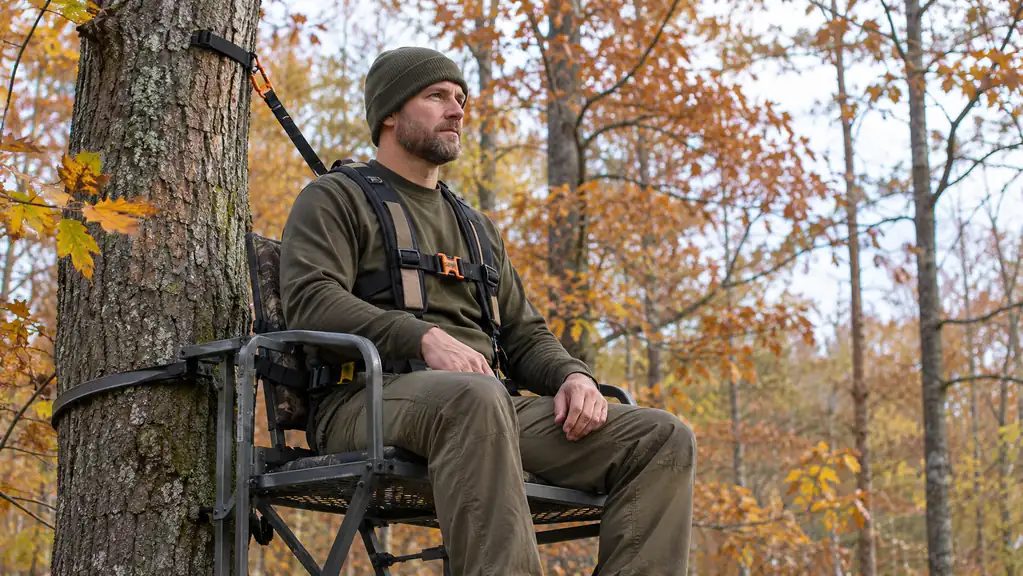
Once you are on the platform, get attached before you sit down, and stay attached for the whole sit. I know men who unhook to shoot. I have done it myself and I was wrong to. The harness will not do a thing for you hanging on a hook on the back of the seat while you stand up to take a shot at a buck crossing the shooting lane. Stay seated, keep it on, and take the shot from the seat. If the angle is wrong, let that deer walk, because there is another one next weekend and there is not another you.
Coming down is the reverse of going up and it gets the same attention. Gear goes down on the haul line first, because you do not want a rifle barrel arriving at the ground at the same time your boots do. Then you stand, connect to the lifeline, and climb down with three points of contact, moving the knot ahead of you as you descend. Do not unhook at the second to last rung just because you can see the ground. Unhook when both boots are planted in the dirt and you are standing up straight. The harness comes off at the truck, gets hung to air out, and gets a hand wash at the end of the season before it goes back in the shed.
One more habit, and it costs nothing. Say the order to yourself every time you climb. Harness on at the truck. Walk the base. Lifeline first. Hook up on the ground. Three points going up. That sounds like something you would teach a teenager, and it is, but I am sixty three years old with a shoulder that pops in cold weather and I still run the list out loud in my head. The climb you have done two hundred times is the one you quit paying attention to, and that is the one that gets people.
What Else Helps
Boots matter more than most people admit. A ladder rung is narrow, and a smooth sole on wet steel is where half of these stories begin. I wear a boot with a deep lug and I knock the mud off at the bottom of the ladder every single time. A haul line is a cheap length of rope that does more for your safety than any gadget on the shelf, because it keeps both hands free on the climb. And where hunter orange is required, and it is required in most of the places I hunt, the orange vest goes over the harness, never under it, or you have just hidden the one piece of gear that matters.
Two more things, both of them plain. One person per ladder stand, always. A stand rated for one hunter does not become a two man stand because your nephew wants to sit with you and watch the same shooting lane. And check the straps, bolts and cables on the stand itself every season, then replace the harness after any fall that loads it. If you take a kid along, and I take my granddaughter Kaylee at eleven, put the harness on her at the truck, let her walk through it on the ground, and let her practice on the bottom rung while you hold the ladder. A child who has done it five times standing on flat ground does it right when it counts and her hands are shaking.
Last item, and it is small. Keep your phone in a zipped pocket on your body, not in the pack hanging on the tree. Leave a note on the dash of the truck with the stand name and the time you went in. Those two habits take thirty seconds and they are the difference between a bad morning and a long one. The harness is not a license to climb careless. It is what buys you the seconds to climb careful.
Practice the climb in October so November goes right
About two pounds, a 300 pound capacity, one size with a standard fit, and quick release buckles you can work with cold hands. The MUDDY harness goes on at the tailgate and stays on until your boots are back in the dirt.
Amazon Check Today's Price on Amazon →