
Nine times out of ten, when a hunter tells me his trail camera is junk, the camera is fine. The tree is wrong. The height is wrong. The card went straight from the package into the slot without anybody checking what the camera was set to. I have made every one of those mistakes myself, and I made most of them in my fifties, which is old enough that I should have known better.
So when I put a WOSPORTS trail camera on my lease last summer, I made myself a promise. I would not judge it until I had hung it where the sign said to hang it and set it the way the book said to set it. Two deer seasons later I have a fair idea of what this camera will do on a north Louisiana lease, and what you have to do to get it. None of it is complicated. Most of it is just slowing down.
This is the non-cellular, non-WiFi version, 64MP, and that matters for how you use it. It does not send pictures to your phone. It sits on a tree, it takes them, and it hands them to you when you walk back out there. On a lease where my phone shows one bar on a good day, that is not a drawback. It is the reason the camera is still hanging in January.
The appeal of a camera like this one is that it is simple. No app to fight with, no monthly plan, no firmware update that rearranges the menu the night before opening day. You put batteries in it, you put a card in it, you work the push buttons on the front, and you hang it. For a man who has spent an hour of his life on hold with a wireless carrier over a camera that quit sending pictures, that simplicity is worth real money.
One camera, one tree, and a card you actually read
Non-cellular, non-WiFi, batteries only. It works where your phone does not, which on most leases is most of the place.
Amazon Check Today's Price on Amazon →Step 1: Walk the ground before you pick a tree
A trail camera is a witness, not a scout. It can only tell you what walked past the spot you already chose. So the choosing is the actual work, and the hanging takes five minutes.
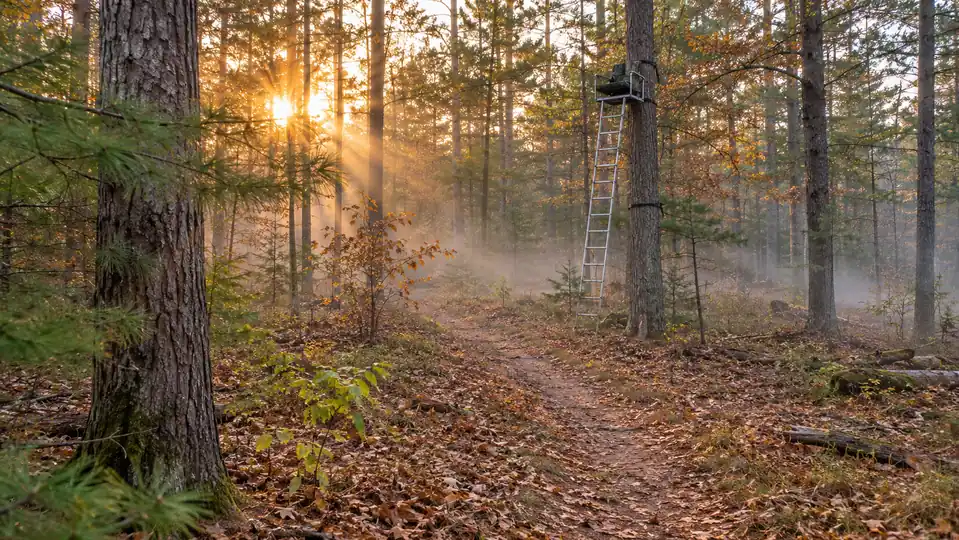
I walked that lease in late July, in the heat, when I could see the ground. I was not looking for deer. I was looking for sign: rub lines along the edge of a thicket, a worn trail crossing a logging road, droppings in a cluster where deer had been feeding and loafing. A rub line is the best free map you will ever get, because a buck made it going somewhere and he will make it again.
I settled on a trail running between a bedding thicket and an old logging road, about forty yards off the road so I would not spook everything walking in. Then I picked a tree that let the camera see twenty yards of that trail instead of three. Twenty yards tells you direction and time. Three yards tells you a deer walked by. That is a big difference in what you learn by the end of October.
Step 2: Hang it at chest height and angle it down
The two mistakes I see most are hanging a camera too high and pointing it dead flat. Too high and you get the top of a deer's back and a lot of sky. Pointed flat and every branch between you and the trail sets it off all night.
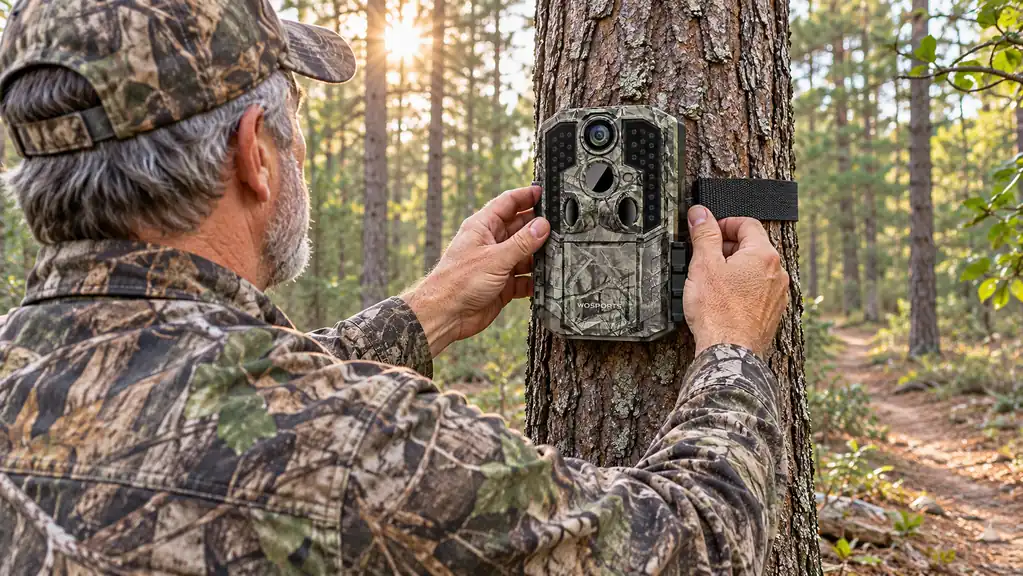
I strap mine at about chest height on a trunk and angle it down a touch toward the trail. The mount on the WOSPORTS is a tree mount or a wall mount, so I use a strap where the trunk will take one and a screw-in bracket where it will not. It weighs a little over a pound, so it does not sag down the tree the way the heavier cameras do by the second week.
Then I use the 2 inch color LCD screen to check the aim before I walk away. This is the step people skip and it costs them an entire card of pictures. You can preview right there on the camera without pulling the SD card, so you stand behind the tree, look at the screen, and see exactly what the camera sees. If a limb is in the frame, cut it. If the trail is riding the bottom edge, tilt it down. Two minutes of that saved me three weeks last fall.
One more thing about aim. Face it north or south if the ground lets you. A camera pointed east catches the sunrise and one pointed west catches the sunset, and a low sun through bare trees will trip a motion camera all morning or all evening. That is not the camera being bad. That is the camera doing exactly what you told it to.
Step 3: Set it before you close the door
Factory settings will get you pictures. They will not get you the pictures you want. This camera lets you choose the resolution instead of locking you into one: 5, 16, 36, 48, 56 or 64 megapixels. That is a real choice with a real cost, and here is how I decide it.
Early season, when I am counting does and getting a feel for what is on the property, I run it lower. More frames per card, longer battery life, and a deer at thirty yards is plenty identifiable at 16 megapixels. Once October gets close and I am trying to sort one buck from another at distance, I run it at 64 and I carry a bigger card. I also turn the 4K video on for scrapes and licking branches, because a still frame will not tell you how a buck is working that branch. Ten seconds of video will.
Burst mode I leave on 3. The trigger is 0.2 seconds, which is quick, but a buck does not stand still after the first frame. The second and third shots are usually the ones where he lifts his head and gives you his rack broadside. If your camera is taking one picture per visit, you are throwing away the best frame of the set.
The 120 degree wide detection is the other thing that changes how you hang it. You do not have to aim this like a rifle. You point it at the trail, it watches a wide swath of that trail, and you pick up deer crossing at the edge of the frame that a narrow camera would miss completely. That is worth more than another two megapixels, in my opinion.
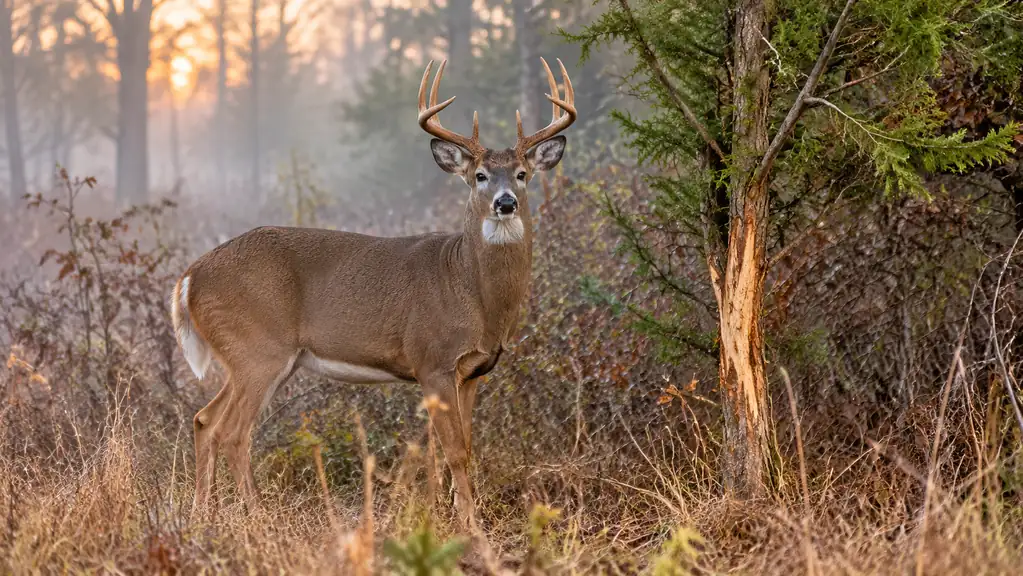
The first frame is the deer arriving. The second and third are the ones where he lifts his head and shows you what he is. If your camera only takes one, you are throwing away the best picture.
Step 4: Keep it dry, keep it fed, and quit checking it
It runs on batteries and it is waterproof, so the two things that will end your season early are dead batteries and a wet card. I run good batteries, I check the seal on the door every single time I close it, and I keep a desiccant pack inside the housing. North Louisiana in September is basically a sauna, and a camera that fogs up inside is a camera that quits. I have run this WOSPORTS camera through two of those Septembers now, and the only card I ever lost was the one I left in the truck.
The night vision is no-glow infrared, which I care about more than I used to. A camera that puts out a visible red glow will educate a mature buck in about two visits. A no-glow camera does not. That does not make it invisible, and I would not tell you it does. It just means a deer is not standing there staring at a red light in the dark.
Now the hard part. Quit checking it every three days. Every trip into that thicket leaves scent and pressure and pushes deer off the pattern you are trying to learn. I check mine every two weeks, at midday, when deer are bedded and I can get in and out without running anything off. If the camera is on a trail I plan to hunt, that is the schedule, no exceptions, no matter how bad I want to know.
The other half of checking is the card. Pull it, swap it, and do not stand out there scrolling through six hundred pictures on a 2 inch screen with your neck bent. Take it home and look at it on the tailgate with a cold drink. That is the part of this I actually enjoy, and it is a lot easier to think straight about what you are seeing.
Step 5: Read the pictures like a tracker, not a scrapbook
A card full of deer pictures is not information yet. What turns it into information is the timestamp, the direction of travel, and what the weather was doing that day. Those three things together will tell you where to hang a stand.
I go through a card once, fast, and flag the daylight pictures. Then I go back through those and write four things in a notebook: the time, which way the deer was walking, where he came out of, and what the wind was doing. Do that for a month and the pattern shows itself without you forcing it. On that lease the does came through the logging road edge between 7:10 and 7:40 every morning in October, and every one of those mornings the wind was out of the north. That is not a hunch. That is a camera telling me where to sit.
I also count unique bucks, and I am honest with myself about it. Two pictures of the same nine-pointer from different angles is one buck, not two. Every season somebody on the lease has a camera full of what he swears is six different shooters, and it is three deer and a coon.
And I do not shoot a deer because he showed up on camera. A camera makes a deer feel like a sure thing, and there is no such thing in a deer woods. What the camera really does is tell you which hour of the morning is worth sitting still for. Sit that hour, sit it quiet, and let the rest take care of itself.
What Else Helps
A lock and a cable. Trail cameras walk off. I run a steel cable through the housing and a padlock on the tree, and I have not lost one since I started doing it. It will not stop a determined thief with bolt cutters. It will stop the fella who sees it and thinks about it for two seconds.
A spare card and a card reader in the truck. Nothing is worse than driving out there, pulling the card, and finding out the reader is sitting on the kitchen table. Reader lives in the toolbox, spare card lives in the glove box, and I do not have to think about either one.
Rubber boots and a slow walk. You are not hunting when you check a camera, you are looking, and the deer do not know the difference. Same wind rules apply on a camera pull as on a sit. I have busted more deer checking a card than I ever have climbing into a stand, and it was always my own fault.
Keep the camera back off the trail a piece. Ten or twelve feet off the edge with the lens angled in is better than hanging it right over the tracks. A camera sitting on top of the trail gets a lot of close-up noses and blowing does, and a blowing doe will clear that whole ridge for a week.
Check your state rules before you hang one over a bait pile. Rules on baiting vary from state to state and sometimes from area to area inside a state, and a camera on a corn pile in the wrong place is a citation, not a pattern. That is not worth any picture.
And be honest with yourself about what this WOSPORTS camera is. It is not a cellular camera. It will not text you a picture while you are at work, it does not want a signal, and it does not carry a subscription. If you want pictures on your phone from two hours away, that is a different camera with a monthly plan attached. If you want to know what is walking your lease and you are willing to go out there and get it, this one does the job and it does it in the cold.
Hang it this weekend and know what is on your ground by October
Runs on batteries, mounts to a tree or a post, no plan and no signal required. Backed by 3,289 Amazon ratings averaging 4.3 stars.
Amazon Check Today's Price on Amazon →