
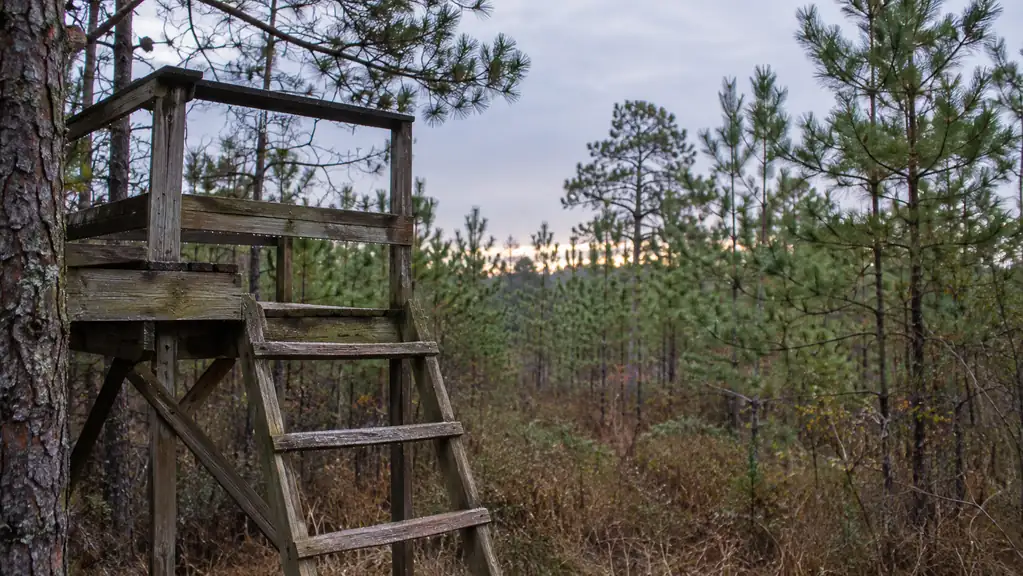
The first deer I ranged from my ladder stand taught me a lesson I did not want. I was tucked into a pine at the edge of a north Louisiana food plot, and a young buck stepped into the lane at what looked like 90 yards. I raised the TIDEWE Hunting Rangefinder with one hand, my heart going like a drum, and tried to get a read while the deer was already turning. The number jumped between the deer and the brush behind it. I never took the shot. I climbed down that evening without knowing whether that buck was at 80 yards or 140, and that is a poor way to end a sit.
Ranging from a ladder stand is not the same as ranging from the truck door. You are 15 to 20 feet up, often seated, often twisted toward a lane behind your shoulder, and often wearing enough clothes to make your hands clumsy. The rangefinder is a simple tool. The routine around it is what separates a useful number from a guess. These are the five steps I use now on my family lease, plus a few habits that keep the unit ready from October through January.
Range the lanes before a deer is standing in them
The TIDEWE Hunting Rangefinder reads from 3 to 700 yards with plus or minus 1 yard accuracy, weighs 5.67 ounces, and rides in its own case. Charge it before the season and check your lanes from the seat you will actually hunt from.
Amazon Check Today's Price on Amazon →Step 1: Set Your Stand and Your Ranges Before the Season
Before you can range a deer, you need to know which deer are rangeable. I pick two or three shooting lanes from my ladder stand and clear only what needs clearing. A lane does not have to be wide. It has to be open enough that a deer walking through it gives you a clear shoulder, and open enough that the rangefinder has something to read besides a wall of brush. I range the edges of those lanes from the seat, not from the ground. The view changes once you are up the ladder, and so does the distance. The angle from your eyes to the ground is different, and that changes the number you get.
On my lease, the north lane runs to a white oak and the south lane runs to an old fence post. I mark both with the TIDEWE before the season opens, while I am sitting with my safety harness on and my back against the tree. I write the numbers down. North oak, 147 yards. South post, 96 yards. The open gate at the corner, 212 yards. Those three numbers tell me more about a deer's position than a guess ever will. They also give me a way to check the unit. If I range the north oak in October and get 147 again, I know the rangefinder is still doing its job.
Some hunters wait until opening morning to do this. I understand the temptation. But a ladder stand is not a place to learn a new tool while a deer is moving. Do the boring work in September, when you can take your time and when you are not trying to keep still. Leave the rut for the deer. If you lease land with other people, tell them which lanes you have ranged so nobody else is walking through your shooting lane at first light. A little coordination saves a lot of grief.
Step 2: Steady the Rangefinder From a Seated Position
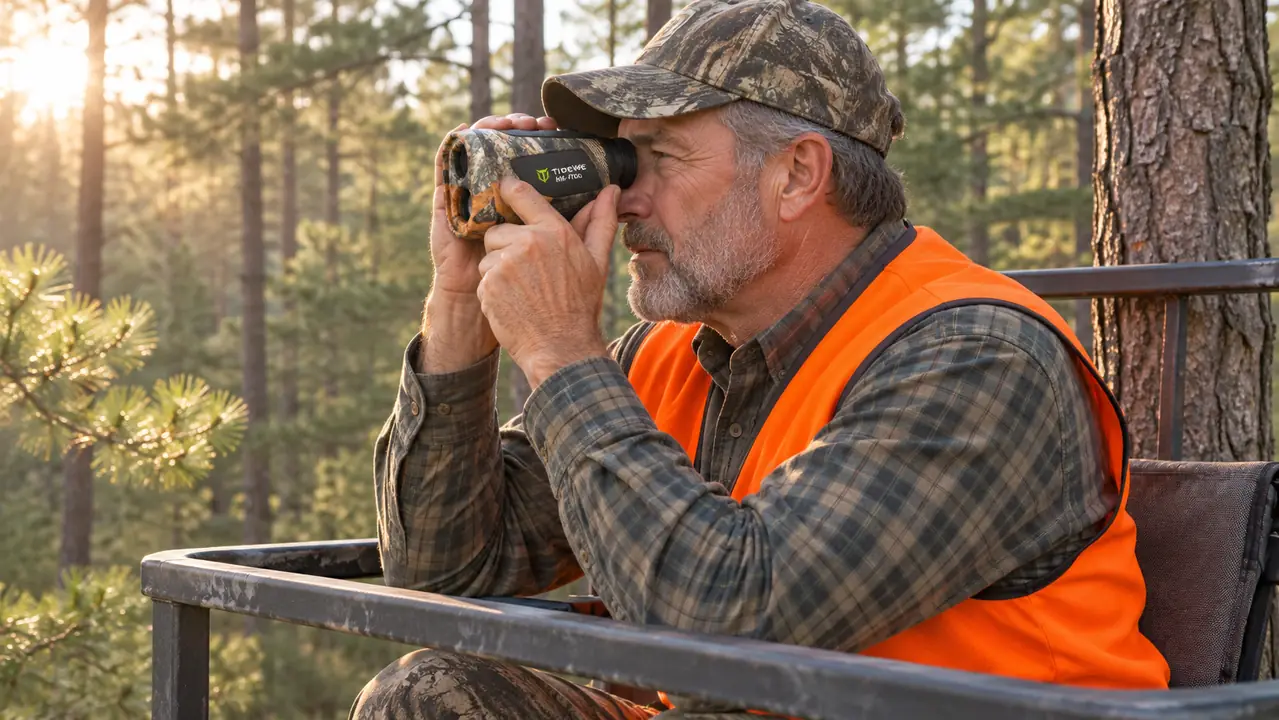
Most missed readings come from movement, not from a bad unit. When I first started, I tried to range one-handed with my left elbow floating in the air. The image jumped, the deer moved, and I got a number off the tree behind it. Now I sit square in the stand, tuck both elbows against my ribs or rest them on my knees, and hold the TIDEWE with both hands. It takes two seconds longer. It gives me a number I trust.
The unit is small enough for that job. It measures 4.13 by 2.61 by 1.49 inches and weighs 5.67 ounces, so it does not pull my hands off balance the way a bigger optic can. The 6x magnification is enough to pick a deer out of the edge of a pine thicket at the ranges I hunt. I do not need more glass than that from a ladder stand, and I do not want a heavy rangefinder swinging from my neck while I am trying to sit still.
Keep your safety harness on while you range. That sounds obvious, and it still needs saying. Do not stand up, lean over the rail, or twist around the tree to get a better look. If a lane is too awkward to range from a seated position, move the stand or give up that lane. A yardage number is not worth a fall. I have seen a stand shift under a man who was leaning too far out, and I do not care to see it again. If you need to range behind you, turn your whole body with your hand on the tree, not just your neck. Slow is smooth, and smooth keeps you in the stand.
Step 3: Aim at the Deer, Not the Brush Behind It
The laser reads what it hits first. If you put the aiming point on the edge of a deer's shoulder and the beam clips a sapling in front of it, you get the sapling. If you put the point on a deer's chest and the beam passes over its back, you get the oak tree 60 yards behind it. I have done both. The fix is to hold the aiming point on the largest, flattest part of the deer you can see, take one breath, and take the reading. Then look at the number and the deer at the same time.
The TIDEWE gives straight-line distance, horizontal distance, vertical distance, and speed. For a shot from a ladder stand, I pay closest attention to the horizontal distance. The straight-line number is useful, but the horizontal number is the one I write on my card. The unit is rated to plus or minus 1 yard, and it reads from 3 to 700 yards. That is more than enough for the shots I take, and it is honest about the short reads too. I have ranged a stump at 12 yards just to see if the unit would do it. It did.
One more thing. Do not range a deer just to range it. Every time you move the unit, you are moving in the stand. If the deer is already inside your comfort range and the lane is known, let it walk. The tool is there to answer a question, not to give you something to do while you wait. I have watched hunters range the same doe four times and then wonder why she looked up at the tree. If the deer is close and the lane is known, trust your card. That is what the card is for.
Step 4: Build a Range Card for Every Lane
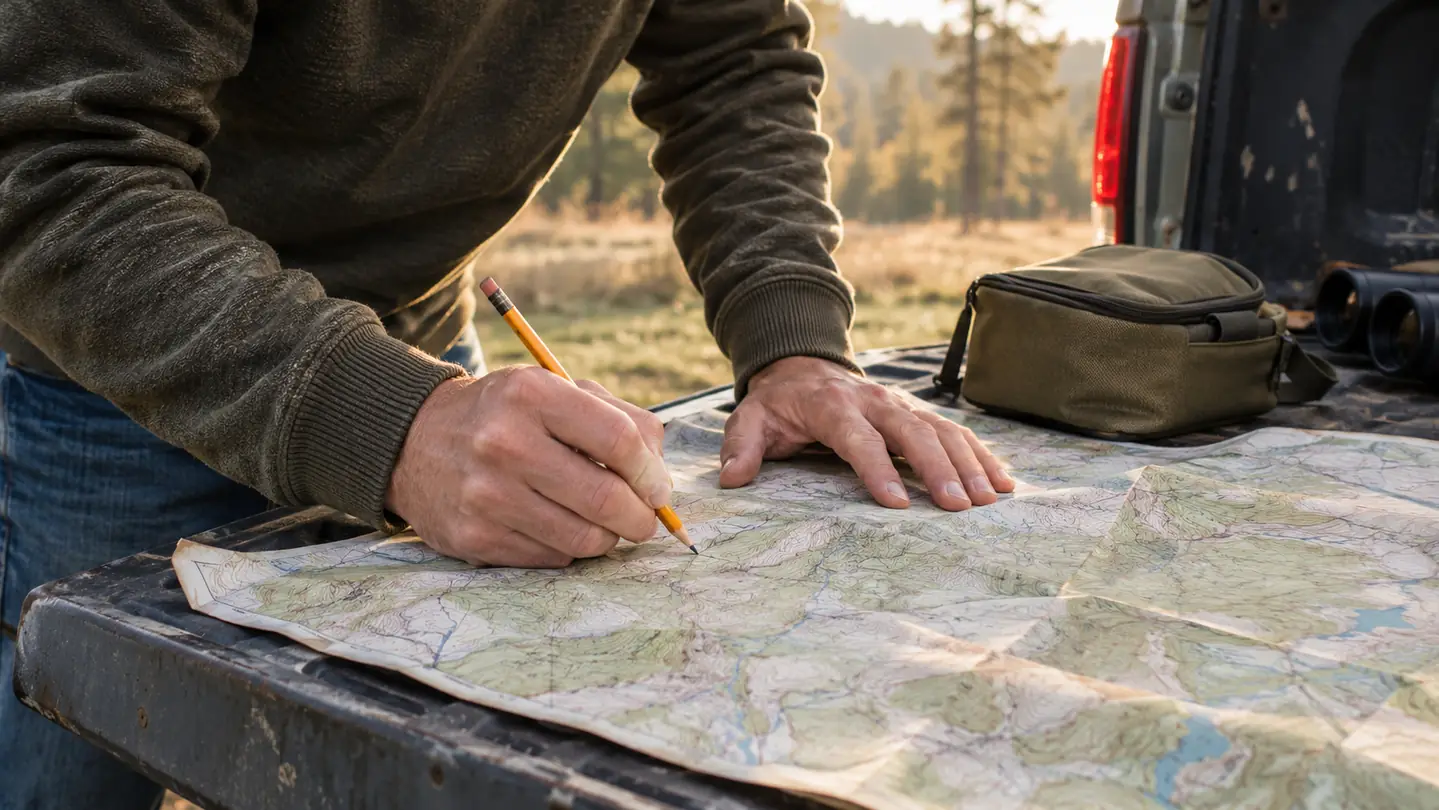
I keep a 3 by 5 card in my jacket pocket. It has a rough sketch of my stand and the lanes, with distances to the landmarks I can see: the white oak, the fence post, the gate, the edge of the cutover, the big pine with the split trunk. I fill it in with the TIDEWE before the season and update it after the leaves fall. A lane that was open in October can be a different lane in December.
Range cards are not just for rifle hunters. If you bowhunt from a ladder stand, the card helps you decide whether a deer is inside the distance you are willing to shoot. If you are carrying a muzzleloader or a rifle, it keeps you from guessing at a long lane when the light is going. The number does not make the decision for you. It keeps the decision from being made on adrenaline.
I also mark the distances to the does and small bucks I plan to pass. That sounds like a waste of a read, but it trains my eye. After a few weekends, I can look at a deer in the north lane and say 'about 145' before I raise the TIDEWE. When the unit agrees, I know my judgment is working. When it does not, I want to know that too. That is how you get better at this, one honest number at a time. The card also gives you something to check after the season, so you know which lanes produced and which ones were just pretty to look at.
Step 5: Protect It, Charge It, and Keep It Ready
The TIDEWE runs on a lithium-ion battery and charges instead of eating disposable cells. That is one less thing to buy, but it also means one more thing to remember. I charge mine the week before the season and again at the halfway point if I have been using it hard. I do not wait until opening morning to check the charge. I also keep the included case in my pack and put the unit back in it after every sit. Dust and grit are not friends to any optic.
The unit has an IP54 rating and is described as waterproof. I treat that as rain and splash protection, not as a license to dunk it in the bayou. If it gets wet, I wipe it down and let it dry with the case open. I do not leave it on the truck dashboard in July or in the bed of the truck overnight. Heat and cold are hard on batteries and plastic, and a rangefinder that lives in a hot truck is a rangefinder that will let you down.
The warranty is one year from the manufacturer, and I keep the receipt in the case. I have not had to use it. I still keep it. If the unit does fail, I want the paperwork where I can find it, not in a drawer at the house while I am two hours away on the lease. A little bookkeeping now saves a lot of frustration later. I also write the date I charged the unit on a piece of tape inside the case. That way I am not guessing about the battery when the weather turns cold.
What Else Helps
Wind, light, and practice matter as much as the unit. I practice from the stand in the off-season, ranging stumps and fence posts until the motion is smooth. I keep a small notebook in my pack for any new landmark I want to add to the card. I also carry a soft cloth, because a dirty rangefinder will read like a bad one.
If you hunt with a partner, agree on who ranges and who watches the deer. Two people moving around in a stand is a good way to spook a buck that was already nervous. And if you are new to ladder stands, spend your first few sits getting comfortable with the harness and the height before you add any gear to the routine. The rangefinder is a tool. It is not a substitute for a safe stand and a clear head.
One habit I picked up from an older hunter: range the first deer you see and then leave the unit alone. The first read is usually the calmest and the most honest. After that, your heart is up and your hands want to move. If you need a second read, take a breath and make it count.
The white oak at the north edge of my lane is 147 yards from my seat. I know that because I checked it with the TIDEWE before the season, not because I guessed while a buck was standing under it.
Know the distance before you draw
The TIDEWE Hunting Rangefinder gives you line-of-sight, horizontal, vertical, and speed readings from 3 to 700 yards, with a 6x image and a 5.67 ounce body. Range your lanes, write down the numbers, and keep the guesswork out of the moment that matters.
Amazon Check Today's Price on Amazon →