
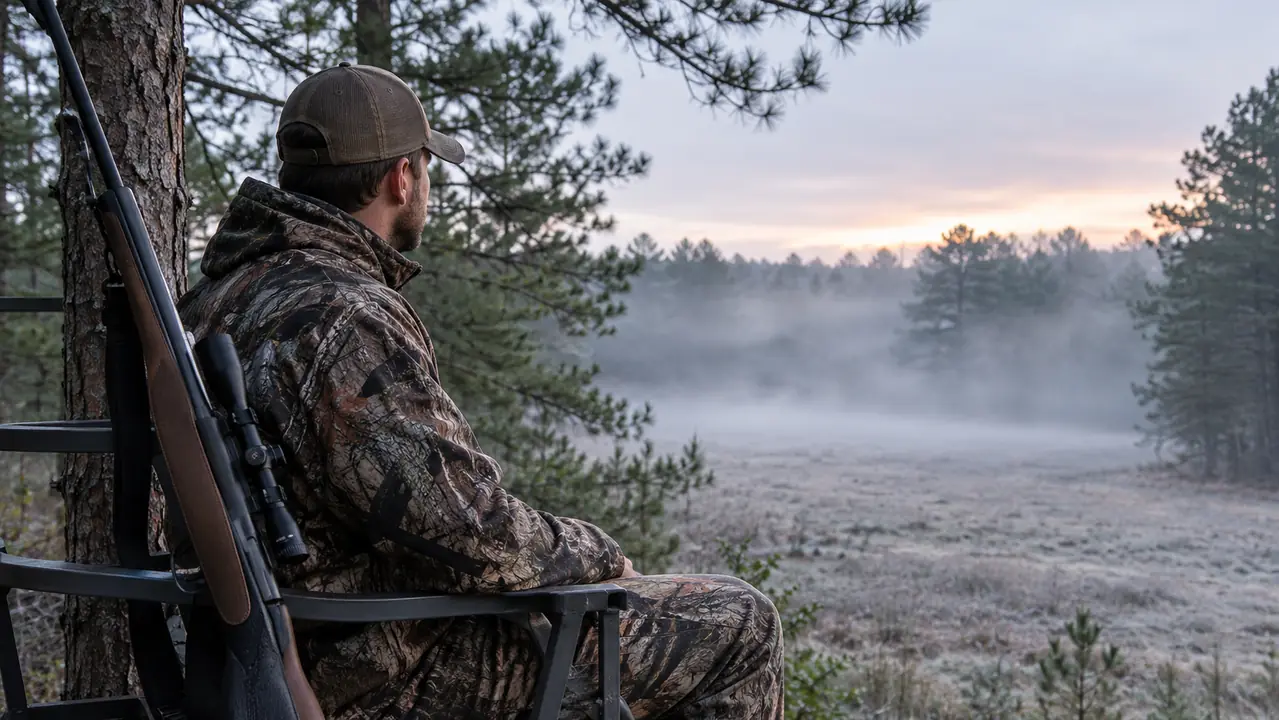
Short answer first, because that is how I would want it. If you hunt deer out of a ladder stand in north Louisiana timber, where the longest shot you will ever get is a shade over 300 yards, the TIDEWE Hunting Rangefinder covers every one of those shots and does it without dragging your jacket down. I have carried it two seasons now. It ranges from 3 to 700 yards and reads to within a yard, it weighs 5.67 oz, it measures 4.13 by 2.61 by 1.49 inches, it charges off the truck, and it has not quit on me in the rain yet. For what it costs against the other one, it is the one I would buy again tomorrow, and I would not have to think about it long.
I am 63 and I have been hunting about 45 years, which means I spent the first 40 of them doing it the old way. I paced off distances. I hung a strip of surveyor tape on a fence post and told myself that was 100 yards. I judged a deer by how big it looked in the scope, which is a fine method right up until the afternoon it is not, and then you are either shooting over an animal's back or you are tracking something you gut-shot. The first time I borrowed a rangefinder from a younger man on the lease, I found out the fence post I had trusted for years was closer to 128 yards. That is a lot of error to carry around in your head for four decades, and it is the reason I stopped arguing with the idea of owning one.
The other side of the argument is a Vortex rangefinder, and I am not going to sit here and tell you it is a bad piece of gear, because it is not. Vortex builds good glass, and good glass is a real thing you can see with your own eyes at the end of legal light. The question is whether that difference is worth the difference in money to a man who hunts pine timber and a family lease. I have hunted beside both. Here is the honest sorting out, including the places where the Vortex wins and I would say so to your face.
| TIDEWE Hunting Rangefinder | Vortex rangefinder | |
|---|---|---|
| Cost to own | Costs considerably less, and the carry case comes in the box | Costs meaningfully more, and the glass is what you are paying for |
| Weight and pack space | 5.67 oz, 4.13 by 2.61 by 1.49 inches, disappears in a jacket pocket | Bigger and heavier, and you feel it on a lanyard by mid-morning |
| Battery | Rechargeable lithium-ion, top it off in the truck once a week | Disposable cell, but you can carry a spare and swap it in the cold |
| Controls in the field | Press for distance, then straight-line, vertical, horizontal and speed modes | More menus to learn before it becomes second nature with cold hands |
| Maximum reach | 3 to 700 yards with plus or minus one yard accuracy | Reaches well past 700 yards, which matters in open country |
| Glass at last light | Serviceable, but it dims out earlier than good glass does | Brighter and sharper in the final ten minutes of shooting light |
| Weather sealing | IP54, so rain and splashes are fine, a dunk in the bayou is not | Built to take a full submersion and keep working |
| Warranty | One year manufacturer warranty | The lifetime warranty Vortex is known for across its optics |
| Best for | Timber and stand hunting inside 400 yards, and bowhunters counting ounces | Open-country hunting and one optic you plan to keep twenty years |
Where TIDEWE Wins
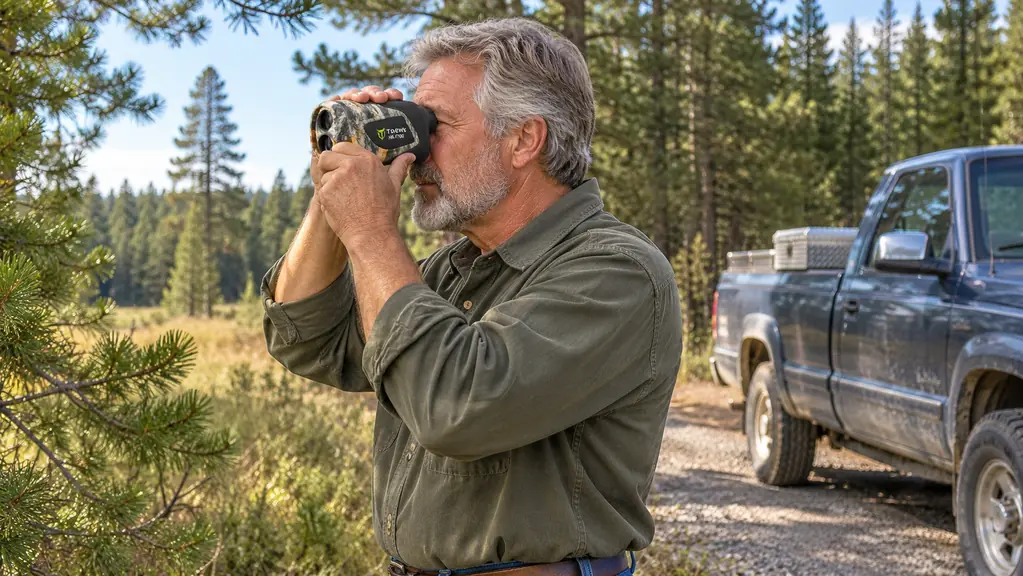
Weight and pocket space decide more hunts than people admit. A rangefinder you leave in the truck because it is a nuisance to carry is worth exactly nothing when a buck steps out at 240 yards and you are guessing. The TIDEWE is 5.67 oz and measures 4.13 by 2.61 by 1.49 inches, so it goes in the chest pocket of my jacket beside the wind checker and I forget it is there until I need it. I want to be plain about what that means in practice. On a cold morning I am wearing a base layer, a flannel, and a camo jacket, and I have a grunt call on a lanyard, a knife in one pocket and a headlamp in the other. Anything that adds bulk gets left behind by the second weekend of the season. This one does not. It came with a case in the box, and the case is what it rides in inside the truck toolbox between hunts, which keeps the lens from getting scuffed against a chain and a hitch pin.
The controls are the other half of that. One press gives me the straight-line distance. I can move to the vertical, horizontal or speed readings without hunting through a menu in the dark. With cold hands and gloves on, simple beats sophisticated every single time. I tested that in January, in the low thirties, wearing a pair of insulated gloves I do not normally hunt in. I could get a reading on the pine at the field edge on the first press. I did not have to take a glove off, and I did not have to hold a button down and wait for a number to settle.
Then there is the practical matter of feeding it. The TIDEWE is rechargeable lithium-ion, so I plug it in on the kitchen counter Sunday night with the phone and the truck keys and it is done. No hunting for a spare cell in a drawer at 5 a.m. I have run it a full weekend, three or four sits, ranging every landmark plus a deer or two, and never had it go dark on me. The cold has not killed it either, which is more than I can say for the headlamp I used to carry. It carries a one year manufacturer warranty, and IP54 means rain and splashes off the brush do not bother it. I have had it out in a steady December drizzle with water beaded on the housing, and it read the same numbers it read in dry weather. I would not drop it in the bayou and expect it to come back, and I will get to that. But for what a man actually does with a rangefinder in Louisiana timber, it covers the job and asks nothing of you but a charge on Sunday night.
Where the Vortex Wins
I said I would be straight with you, so here it is. Glass is where the Vortex earns its money. In the last ten minutes of shooting light, when the pines go flat gray and a deer body turns into a shape instead of an animal, the better glass lets you keep picking out the edges of things after the cheaper optic has gone murky. I had an evening in early December on the lease that made this plain to me. There was a doe and a yearling working the far edge of the food plot, and through the TIDEWE I could tell there were two deer but I could not tell you which was which once the light dropped below the treeline. A friend on the next stand had a Vortex, and he picked the yearling out of the pair without any trouble at all. That is not a knock on my unit. It is just what money buys in glass, and if you sit until the last legal minute you should know it going in.
If you hunt wide-open country, a power line, a bean field, a clearcut where a deer can stand at 800 yards and dare you, the Vortex also reaches farther than the 700 yard ceiling on the TIDEWE. Neither of those is a small point and I am not going to talk you out of them.
Weather sealing goes to Vortex as well. The TIDEWE is IP54, which handles rain, splashes and a wet jacket pocket all day long, but it is not built to be submerged. I hunt ducks a few mornings each winter out of a 16 foot aluminum jon boat, and I have watched a thermos and a phone go into that water. If you are the fella who wades a slough in the dark and things end up overboard, that rating difference should be in your head.
And then the warranty. Vortex is known for a lifetime warranty on its optics, no receipt and no argument, and a one year manufacturer warranty on the TIDEWE is not in that league. That is the plain arithmetic of it. If you are 35 and you plan to hand the thing to a grandson in fifteen years, or if you are the sort who breaks one every few seasons and would rather not buy twice, that is worth real money and it belongs in the decision. I am 63. My arithmetic runs different. I need a tool that works this season and the next one, and I will take the rest as it comes.
The one that lives in my jacket pocket, not the truck console
6.5x magnification, 3 to 700 yards, plus or minus one yard, 5.67 oz, rechargeable lithium-ion, case in the box, one year manufacturer warranty. It is the rangefinder I hand to my son when we walk out to the stands.
Amazon Check Today's Price on Amazon →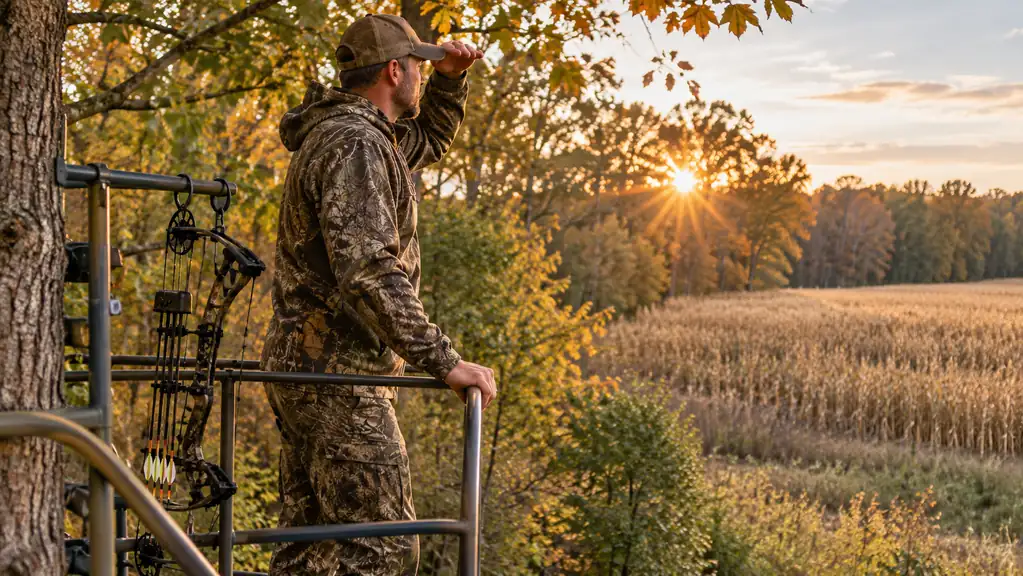
What Two Seasons in the Stand Taught Me
I set up my ladder stand on the family lease facing a food plot with a pine edge at the far side. Before the season opened I walked the plot and ranged the landmarks: the big pine on the left corner, the stump in the middle, the fence post on the right. I wrote the numbers on a piece of tape stuck inside the stand rail. The far pine read 287 yards, three passes, three times the same number. The stump read 141. The fence post read 96. That is the whole value of the thing right there. When a deer stepped out at that edge in November, I did not have to guess and I did not have to talk myself into a distance I wanted to be true.
I did the same job on the stand at my other spot, the one looking down a logging road. Three landmarks, three numbers, on tape. It takes about ten minutes and it is the best ten minutes you will spend all season. What it also did was show me how bad my eye had gotten. I had been calling that pine 200 yards for years because it looked like 200 yards to me. It is not 200 yards. It is not close to 200 yards, and every one of those mornings I had been making a decision on a number I made up.
I also made the mistake everybody makes once. Early on I ranged the brush in front of a doe instead of the doe, got a number that felt good, and had to redo it while she was getting nervous. Range the animal, not the scenery. If there is a branch or a sapling between you and the target, move the box until the laser is on hair. The second mistake was ranging the whole group instead of one deer. Two deer standing a body apart will give you two different numbers and you will get flustered and lose the chance. Pick the one you would actually shoot and range that one.
The other thing I learned is my own routine. The battery holds up fine across a weekend of hunting, and the cold has not killed it on me, but I charge it every Sunday anyway because I do not want to find out the hard way. That is not a knock on the unit. It is just what a man should do with anything he depends on. A rangefinder with a dead battery is a paperweight, and it will be a paperweight on the one morning you needed a number.
The far pine read 287 yards, three passes, three times the same number. That is the whole value of the thing right there.
Who Should Buy Which
Buy the TIDEWE if your hunting looks like mine. Pine timber, hardwood bottoms, a ladder stand on a lease, shots from 40 to 300 yards, and a lot of mornings where you never take the safety off at all. Buy it if you bowhunt and count every ounce in the pack. Buy it if you are outfitting a son or a granddaughter with their first rangefinder and you want something that works without handing over a paycheck. Buy it if you are the kind of person who will actually charge it Sunday night and keep it in a jacket pocket instead of a console. It measures 3 to 700 yards to within a yard, it is light, and it does not ask much of you.
Buy the Vortex if the money is not the deciding factor and the light is. If you hunt open ground, if you glass a lot, if you are the man who sits until the last legal minute and needs to see through it, better glass will pay you back. Buy it if you want one optic for the rest of your life and a warranty that backs that up. And if you do not know which hunter you are yet, start with the TIDEWE. You will learn what you actually need inside one season, and you will not have spent the big money learning it. That is not a knock on Vortex. It is just the order I would do it in.
Start with the one you will actually carry into the woods
Two seasons, one charge a week, no complaints. 3 to 700 yards, 5.67 oz, straight-line, vertical, horizontal and speed readings, and a case in the box. Read the long-term review before you decide.
Amazon See Today's Price on Amazon →