
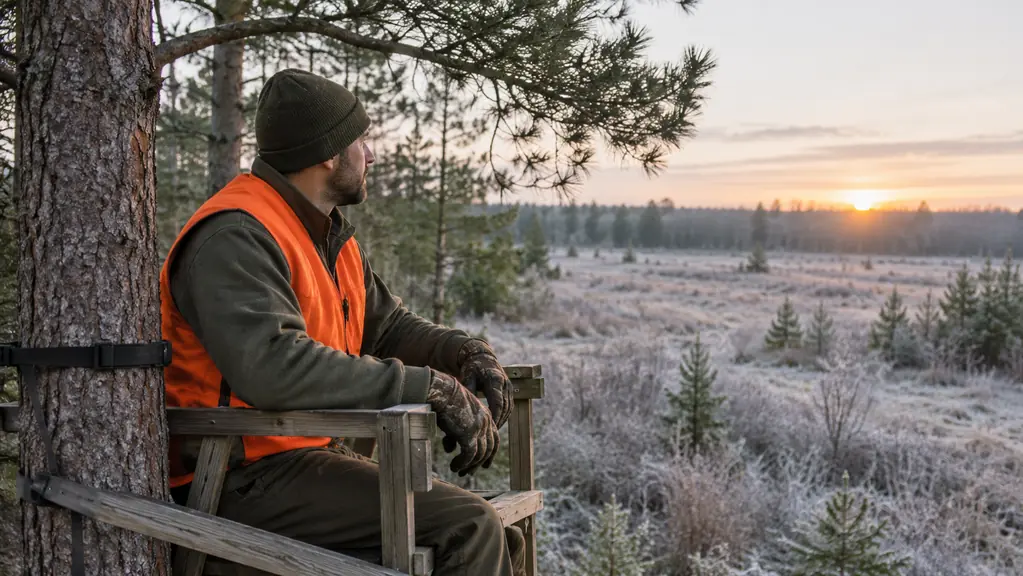
The deer came out of the pines at what I would have called 200 yards. I called it 200, held a touch high, and watched the bullet kick dirt short of his chest. He was farther than that. I never saw him again that season. I have hunted whitetails on the same family lease in north Louisiana for a long time, and I still cannot look at a deer standing in a cutover and tell you the yardage. Nobody can. Not reliably. Not at 200 yards with flat light and a crosswind moving the broom sedge.
For years I carried an old optical rangefinder that read to about 150 yards on a good day, and I carried a phone app that quit working every time the temperature dropped below freezing and I had gloves on. I told myself that was good enough. It was not good enough. Last fall I put the TIDEWE Hunting Rangefinder in the truck and used it through deer season, duck season, and a couple of crappie trips where I ranged the distance to a brush pile out of pure curiosity. Here is what held up and what did not.
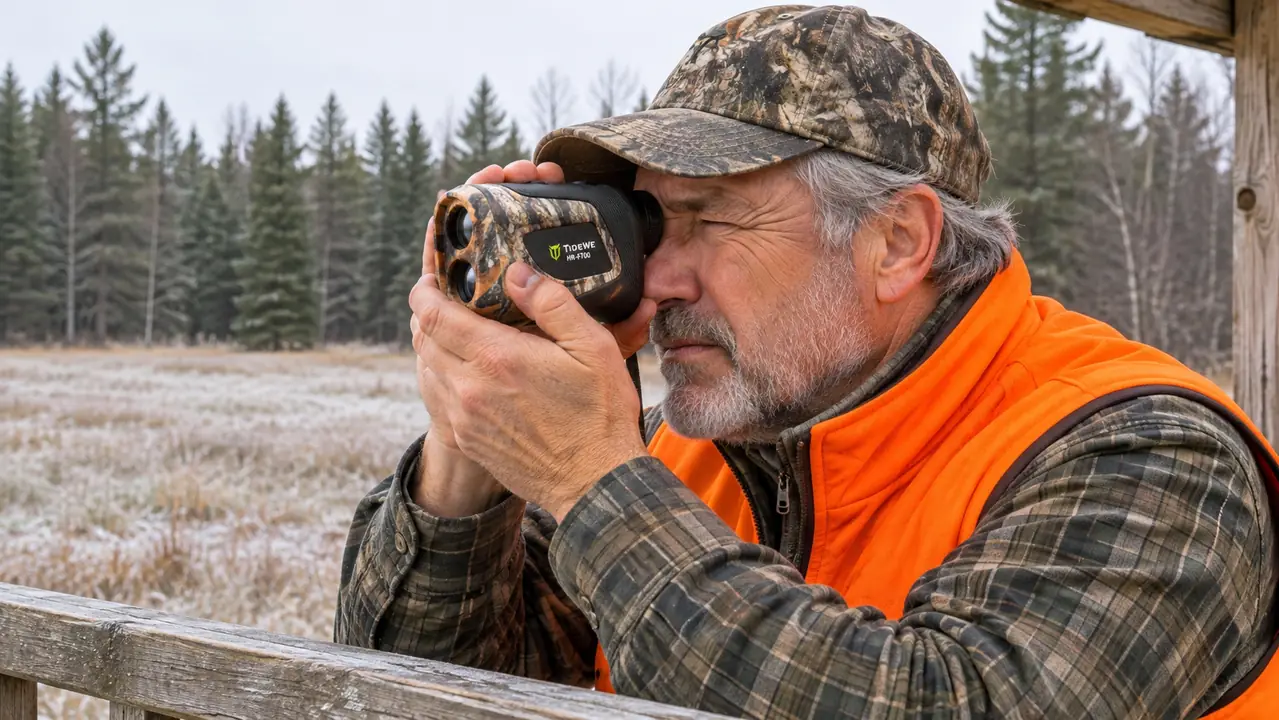
The first thing I noticed is that it is small. The listed size is 4.13 by 2.61 by 1.49 inches and the listed weight is 5.67 ounces, which is about the size of a thick deck of cards. It rides in the chest pocket of my jacket without pulling the coat open. It comes with a case. I used the case for about a week before I quit bothering with it and just dropped the unit in my pocket.
Setting it up took ten minutes on the tailgate. The TIDEWE reads straight-line distance, vertical distance, horizontal distance, and speed, and the magnification is 6.5x. The range is listed at 3 to 700 yards with plus or minus one yard of accuracy. I did not test it to 700. I tested it against fence posts and feeder legs at distances I already knew, out to 300 yards, and it matched every one of them within a yard.
The first morning I carried it, a doe and two yearlings fed out at the far end of the food plot. The old me would have guessed 250 and been wrong by 60. The unit said 191, twice in a row, standing still and again a minute later. That is a different shot entirely. It is the difference between a clean kill and a tracking job you do in the dark with a flashlight.
The horizontal distance reading is the one that earned its keep. On a ladder stand you are 15 or 18 feet up, and the line to the deer is longer than the ground distance. The unit gives you the horizontal number separately, so the holdover you practiced on flat ground is the holdover you use from the stand. I also used the speed reading twice on a walking buck. It gave me a number. What I did with that number is my own business, and I will tell you it did not make me a better shot, it just made me less surprised.
I tested it against fence posts at distances I already knew, out to 300 yards, and it matched every one of them within a yard.
Stop guessing the yardage on a deer you may only see once
Same unit I carried all season. Check the current price and read the reviews from hunters who have put it through more than one November.
Amazon Check Today's Price on Amazon →Cold is where a lot of electronics quit on me. North Louisiana cold is not Montana cold, but a 26 degree morning in a ladder stand will find the weak ones. The TIDEWE is rechargeable, lithium-ion, so I charged it in the truck on the way to the lease and never once dug for a coin battery in the dark. It made it through a full season of reading maybe 20 times a hunt, on one charge, with plenty left over.
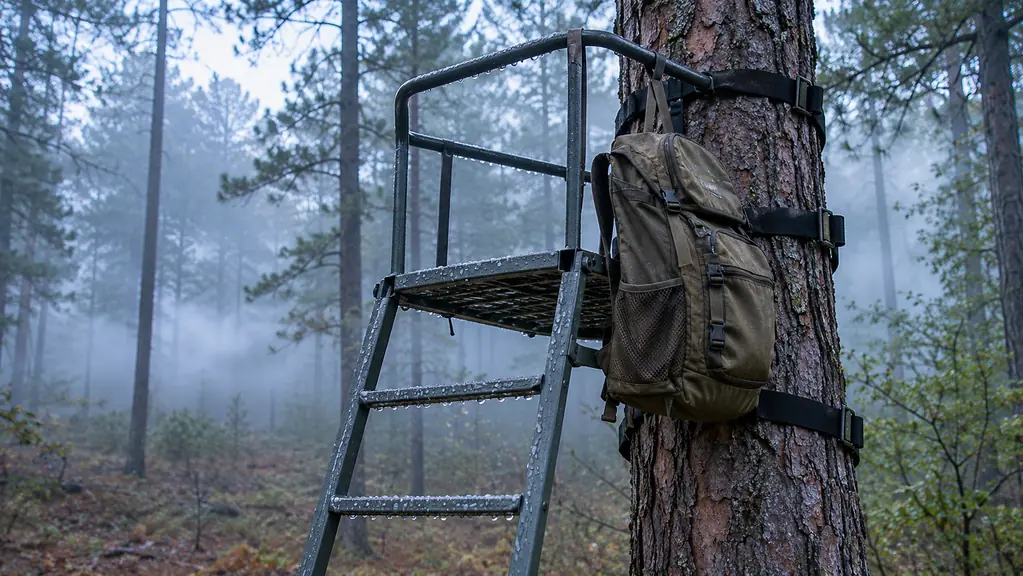
Rain is the other test. I sat through a two hour misting rain in December with the unit in an open pocket. It fogged on the outside and kept reading. The listing says waterproof and IP54. I would not drop it in the bayou and go diving after it, but I did keep using it in weather that would have ruined my old one.
Now the parts I did not care for. The body is plastic and it feels like plastic. The 6.5x magnification is plenty to identify a deer at distance, but it is not a binocular, and if you hold it one-handed at 300 yards on a cold morning you will see every shake in your arm. Brace it on the stand rail. The included case is plain and thin. And near the end of shooting hours, in that flat gray light, the readings get slower and less sure. That is true of every rangefinder I have owned, and it is worth knowing before you count on it at last light.
Travis borrowed it for a week of rifle season and gave it back, which from him is a compliment. My granddaughter Kaylee is 11 and fishes with me on weekends, and she likes to range the opposite bank, the boat dock, and anything else she can point at. It survived that too.
One more thing, because it matters more than the gear. I range from the stand with the rifle on the rail and the chamber empty, harness buckled, and I do not range with a rifle in my hands. The unit is not the safety part. It just tells you the truth about a distance you were about to lie to yourself about.
What I'd Tell You If We Were Sitting at My Kitchen Table
If you shoot inside 100 yards and you know your property down to the fence post, save your money and keep doing what you are doing. If you are like me, hunting a lease where a deer shows at 180 one evening and 260 the next, and you have been guessing, this is the cheapest accuracy you will ever buy. It will not make you a marksman. It will stop you from holding high on a deer that was closer than you thought, which is the exact miss I made. Practice from the stand with the horizontal number. Know your holds before the season, not during it. Keep the unit in your pocket instead of the toolbox, because a rangefinder in the truck has never ranged anything. And if you take a kid along, let them play with it. Kaylee ranges everything within 400 yards now, and she is a better judge of distance at 11 than I was at 40.
One season in, it still lives in my jacket pocket
Rechargeable, 3 to 700 yards, plus or minus one yard. If it survives a Louisiana winter in an open pocket, it will survive yours.
Amazon See Current Price and Details on Amazon →