
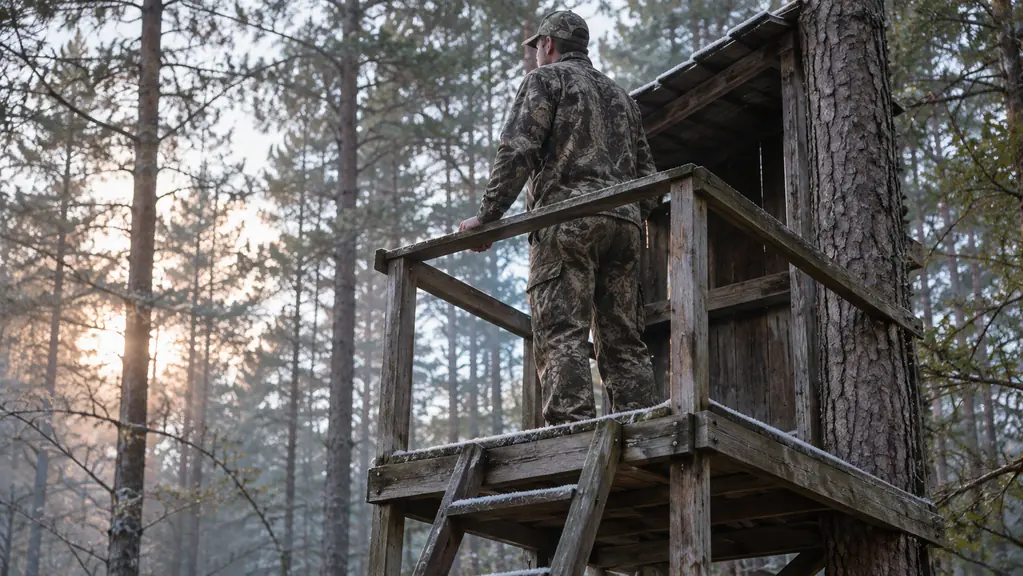
The first time I climbed into a ladder stand wearing the MUDDY Safety Harness, I did what I always do with anything rated to hold me off the ground. I stood on the platform, hooked in, and rocked my weight against it to see what gave. Nothing gave that was not supposed to. That was the second week of October on a family lease in north Louisiana, sixteen feet up a pine, and I have worn that harness on every sit since. I have good things to say about it and a few complaints, and both are in here.
I am 63 and I have been hunting about 45 years. In that time I have owned four harnesses. Two were uncomfortable enough that they lived behind the truck seat. One was comfortable and had webbing that went stiff as a board after three seasons, which is how a man ends up climbing in something he does not fully trust. So when I say a harness is worth a place in the truck, I am not comparing it to some perfect design in a catalog. I am comparing it to the ones I actually climbed in, and to the one hanging on a nail in my shed right now, waiting on a pre-season inspection.
The Quick Verdict
A light, low-stretch nylon harness that stays out of your way on the walk in and held up through a full Louisiana deer season. The one-size fit and the box that holds only the harness are the two things to settle before you order.
Amazon Check Today's Price →Two Pounds of Nylon Between You and the Ground
That is the whole idea. The MUDDY Safety Harness weighs about two pounds, carries a 300 pound rating, and never once made me fight it on a long sit. Check the current listing, and read the included components line, before you climb.
Amazon Check Today's Price on Amazon →How I've Used It
My lease has three ladder stands and one lock-on, and the tallest is sixteen feet to the platform. I put the harness on standing in the truck bed with the tailgate down, over a long-sleeve shirt and jeans, before I ever walk to the tree. That is not a style choice. Sorting out leg straps in the dark at the base of a pine, with a headlamp in your teeth, is how a man ends up climbing with a twist in the webbing that he does not find until he sits down. Mine goes on at the truck, gets checked at the truck, and then I walk.
Walking in, the weight is the thing you notice, or rather the lack of it. Two pounds is nothing across a quarter mile of cutover. My old harness had a stiff back panel that rubbed the top of my hip bones and made me feel like I was wearing a saddle. This one is padded nylon, low stretch, and it sits close enough that a jacket goes over it without a fight. I climbed eleven times last season in temperatures from the low sixties down to twenty-nine, and I never once took it off at the top and hung it on a branch the way I used to with the stiff one.
The sits are where a harness either earns trust or does not. On a ladder stand you lean on the shooting rail half the time and sit back the other half, and a harness that rides up under your arms will have you fighting it by nine in the morning. This one did not ride up on me. When I loaded it on purpose, and I did that on the bottom rung of the ladder with my boots near the ground, the webbing took the weight without a long sag and set me back down. Low stretch matters more than people give it credit for. A little give is comfortable. Too much give is a longer drop than you planned for.
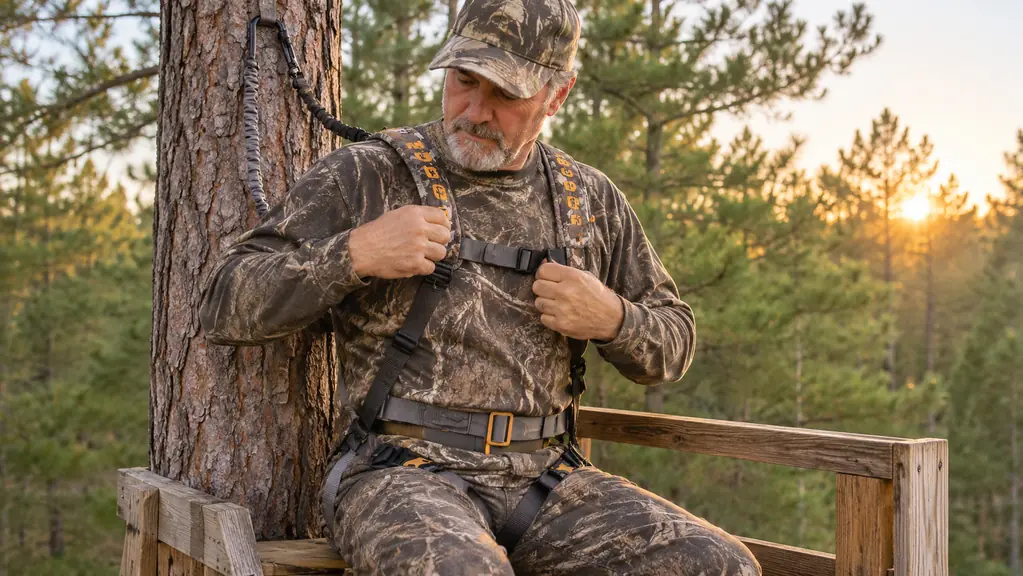
What the Spec Sheet Actually Says
Here is what the listing gives you, and I checked it against the tag on my own harness. Nylon. Two pounds. Maximum weight capacity of 300 pounds. One size, standard fit, listed as low stretch and lightweight, and the style number is MUD-MSH500 if you want to match it up. That is the whole technical story, and there is no gadget anywhere on it, which for fall protection is what I want. Fewer parts to fail at sixteen feet. The 300 pound rating is the number I would pay attention to if you are a big man, because a lot of us are, and a harness rated at 250 would leave some hunters with no room at all.
The rest of the label is housekeeping, and it matters more than housekeeping usually does. One year limited warranty. Hand wash only, which I did at the end of the season in a five gallon bucket with a hose and a squirt of dish soap, and the webbing came clean without going stiff. Do not put it in the washing machine. I have seen what a machine does to nylon webbing over a couple of seasons, and the convenience is not worth it. Imported. And then the line that reads included components, harness. Read that one twice, because it leads straight into the first thing nobody tells you.
What Held Up Over a Full Season
Eleven sits in a ladder stand, two more in a ground blind where I wore it out of habit, and a walk in and out of the lease on every one of those days. At the end of the season the webbing still flexed in my hands. That sounds like a low bar. It is not. The harness I retired had webbing that creased and stayed creased, and once nylon does that you cannot trust your eyes on it anymore, because a crease will hide a worn spot from a flashlight. Padding did not flatten out where the shoulder straps cross. The buckles still released clean and snapped shut with a click I could hear, and I check that click every single time, because I have climbed with a buckle that looked closed and was not.
Stitching is where a cheap harness gives up, so that is what I look at hardest. I went over every seam at the end of the season with a flashlight and found no pulled threads, no fuzzy ends, and no place where a bar tack looked thin. Nothing had moved where the shoulder straps meet the waist belt, and that is the one place on a harness where movement would retire it on the spot. The padded sections still had their shape. The nylon had not gone shiny anywhere either, and shiny webbing is the first sign of abrasion on a piece of gear you are trusting with your weight.
I am about 210 pounds with a jacket on, and I had room under the 300 pound cap. The nylon did not chafe through my shirt on the long sits, and I never got the hot spot under the arm that makes a man start shifting around at the worst possible moment, which is when a deer is coming and you cannot move. The one place it rubbed was the back of my neck on the walk in, where the strap sits under a coat collar. That is more of a coat problem than a harness problem, and I fixed it with a hood.
Eleven sits, one full season, and the webbing still flexed in my hands. That is the only test that counts, and the MUDDY passed it.
What Nobody Tells You
One size fits all is a polite fiction in every piece of clothing ever made, and a harness is no different. On my frame the straps had plenty of tail left over, and I ended up rolling the excess and tucking it so it would not flap against the stand. If you are a small man, or a woman built narrow through the shoulders, you will be close to the end of the adjustment range, and that is worth knowing before you order. It will still work. It just means more tail to manage and less slack to work with when you are layered up in a heavy jacket.
The included components line says harness, and it means harness. If you are replacing a whole rig, your tether and your tree strap may be coming off the old one and going onto the new one. That is fine if you have inspected them and they are sound. It is not fine if you are doing it at the tailgate in the dark because you assumed the box had everything. Lay the old rig out in daylight, look at every inch of the rope, and make that decision on purpose instead of on instinct.
Quick-release buckles are a fine thing in October and a different thing in January. With a heavy glove on I could still work them, but I took the glove off my right hand for the first few climbs until the order was in my head. The order is the point. Same sequence every time, starting from the ground, and you never have to think it through in the cold. Leg straps, then waist, then chest, then check the tail. I have done it that way long enough that my hands do it while I am looking up at the sky and thinking about coffee.
It gets dirty and it holds a little smell. Mine has been rained on, dragged through mud, and hung in a shed with a kerosene heater in it. The hand wash took care of the mud. The smell took two days of airing out on the porch rail, and Darlene made one comment about it and let it go. Store it hanging, not wadded up in a bucket, and keep it off the floor. Mice will chew nylon. That is not a flaw in the harness, it is a fact of a shed, and I have lost a good rope to it before.
What I Liked
- About two pounds, so it does not wear you down on the walk in
- Low stretch webbing takes the weight without a long sag
- Padded nylon stayed comfortable through long sits and never rode up
- 300 pound weight rating leaves room for a big frame and a heavy jacket
- Quick-release buckles still worked with cold hands and gloves
- Stitching and webbing looked sound after a full season of use
Where It Falls Short
- One size means a good deal of strap tail to manage on a smaller frame
- The box is the harness only, so your tether and tree strap are on you
- Hand wash only, with no shortcut through the washing machine
- Buckles take practice before you trust them in the dark with gloves on
- One year limited warranty is not long for a piece of safety gear
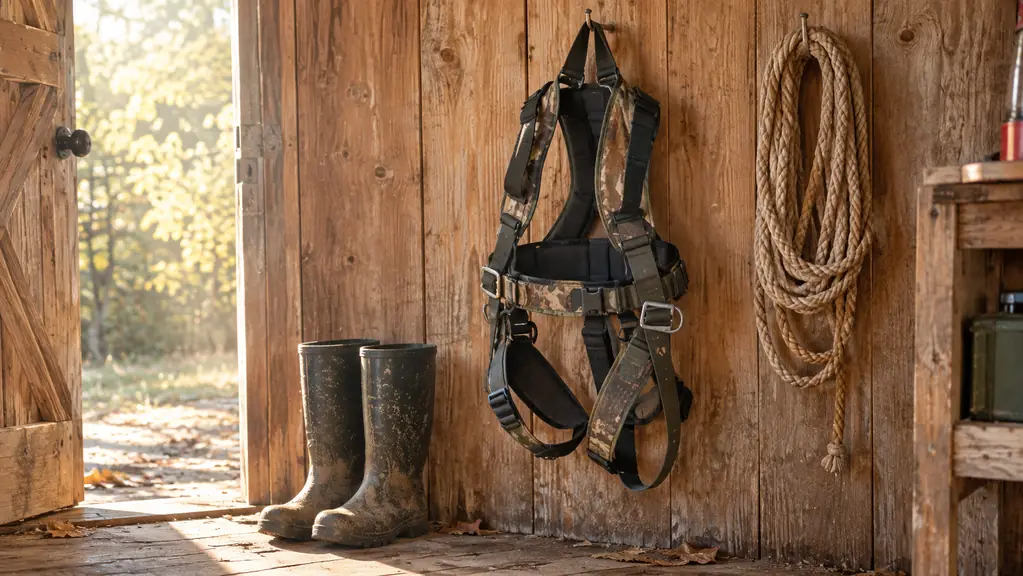
The Fit Question Nobody Asks
Everybody asks whether a harness is comfortable. Almost nobody asks whether it will still be comfortable with forty pounds of clothing under it and a rifle sling over the top. A harness that fits fine in a t-shirt can turn into a wrestling match in December. On the coldest morning I wore a base layer, a flannel, and a heavy jacket, and I loosened the chest strap one notch at the truck before I walked in. That is the adjustment that matters most in cold weather and it is the one people forget.
The other fit question is where the leg straps sit. Too high and you will know it on the climb. Too low and they will not do their job when it counts. Mine stayed where they were set for eleven sits, and that is the right way to do it. Set the harness up at home in daylight, wearing what you will actually wear, and mark the straps with a paint pen if you are the kind of man who forgets. I am that kind of man. Mine is marked, and it has not moved since the first week of October.
How It Compares to the Stiff One I Retired
The harness I retired was heavier and had a back panel that felt like a piece of plywood against my spine. It did its job for three seasons and I have no complaint about how it performed. What killed it was the webbing going stiff and a bar tack that started to fuzz where the shoulder strap met the waist. It did not fail in the field. I retired it because I could no longer look at it and be sure, and a harness you are not sure about is worse than no harness, because you climb anyway. That is the real comparison, and it has nothing to do with features.
The MUDDY is lighter, and lighter means I wear it on the walk in instead of carrying it and putting it on at the tree, which is where I have seen more sloppy clips than anywhere else. It goes into the truck toolbox without hogging the whole thing. It washed up clean at the end of the season. And after eleven sits the webbing still flexed and the stitching still looked new, which is the only endorsement that means anything from me. Ask me again after three seasons and I will tell you whether it earned a longer stay.
Who This Is For
This is for the hunter who climbs a ladder stand or a lock-on a dozen times a season and wants a harness that does not turn into a negotiation every time. If you are 200 pounds or better, the 300 pound rating and the low stretch webbing will matter to you. If you are replacing a stiff old harness and you already have a tether and tree strap you trust, the box has what you need and nothing you do not. And if you hunt alone, as I mostly do, with nobody at the base of the tree to check your straps, a harness you can put on correctly by feel at the tailgate is worth more than a fancy one you fight with in the dark.
Who Should Skip It
Skip it if you are narrow through the shoulders and you know from experience that one size gear never fits you, because you will be near the end of the adjustment and there will be a lot of strap tail to manage. Skip it if this is your first harness and you assumed the box had the whole system in it, because the included components line says harness, and it means harness. Skip it if you want a warranty longer than a year, because a year is what the label gives you. And skip any harness, this one included, if you are not going to look it over before every season and retire it when the webbing tells you to. The best harness in the catalog is a bad one if it lives in a bucket in the shed for six years.
If Your Old Harness Went Stiff in the Shed, This Is the Replacement
Two pounds, a 300 pound rating, low stretch nylon, and a full season on a north Louisiana lease behind it. Check the current listing and read the included components line before you order.
Amazon Check Today's Price on Amazon →