
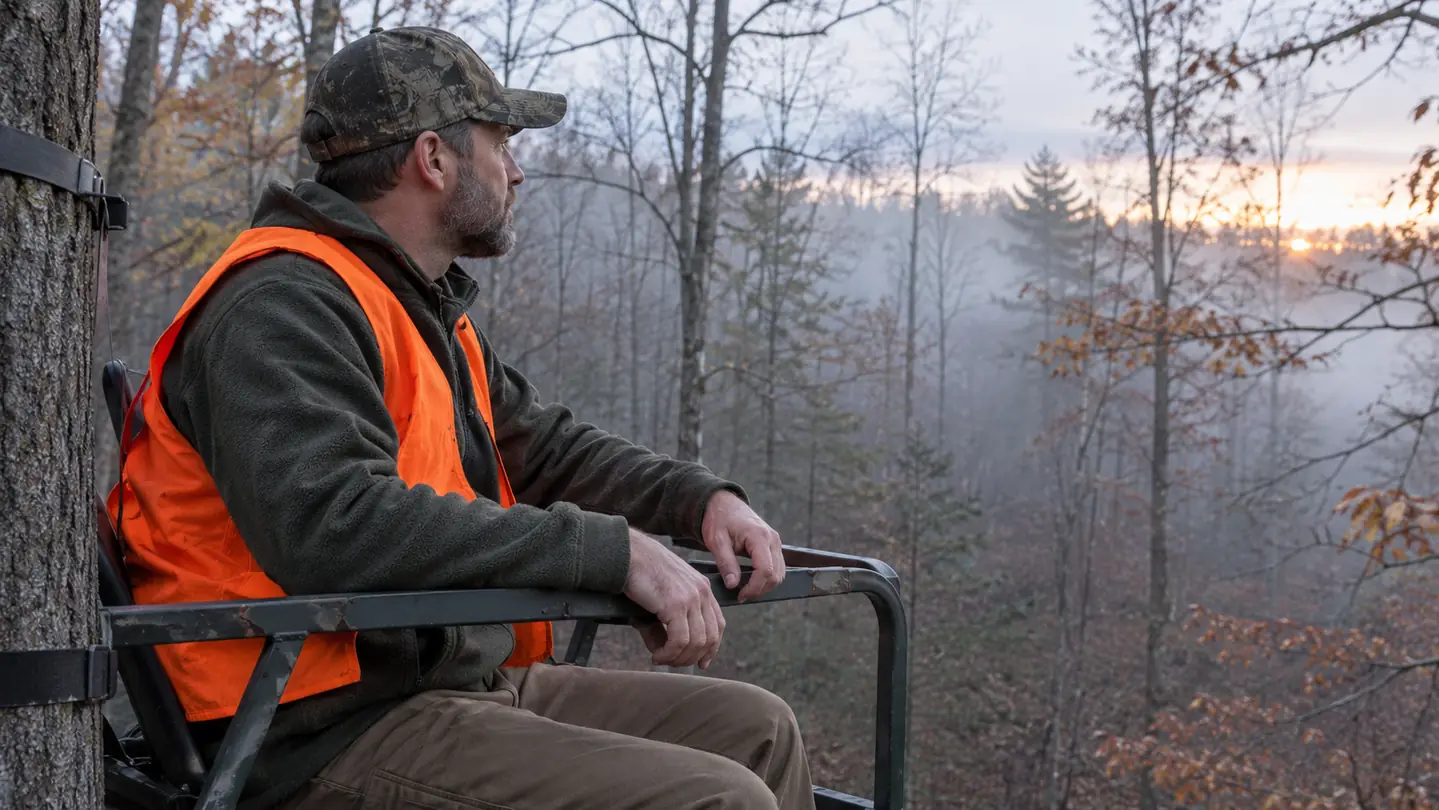
I have been guessing yardage for forty-five years, and I finally quit. The moment that broke me came last November on the family lease in north Louisiana. A buck stepped out of a pine thicket at what I would have sworn on my mother was 180 yards. I held a touch high, touched it off, and watched the dirt kick up a good forty yards past him. He was gone before the sound quit rolling. I sat back down in that ladder stand, mad at nobody but myself, and decided that was the last deer I would ever miss for lack of a number.
That week I ordered the TIDEWE Hunting Rangefinder, the rechargeable hunting model that shows up on every budget optics list and costs far less than most of them. I have carried it now through a full fall of whitetail hunting from a ladder stand, a winter of duck mornings on public land, and a summer of practice off the porch and out of the jon boat with my granddaughter Kaylee. Months of it. This is the honest version of what I found, including the parts that made me set it down and the three things the listing does not spell out.
The Quick Verdict
Accurate, light enough to forget in a jacket pocket, and honest out to about 400 yards in decent light. Flat light, a one-year warranty and a splash rating that is not the same thing as waterproof keep it from being the last rangefinder you will ever buy.
Amazon Check Today's Price →The number that would have saved that buck
Six power, 3 to 700 yards, plus or minus a yard, and a five-ounce body you can hang around your neck all day without noticing. Check the current price and the full spec sheet before your season opens.
Amazon Check Today's Price on Amazon →How I've Used It
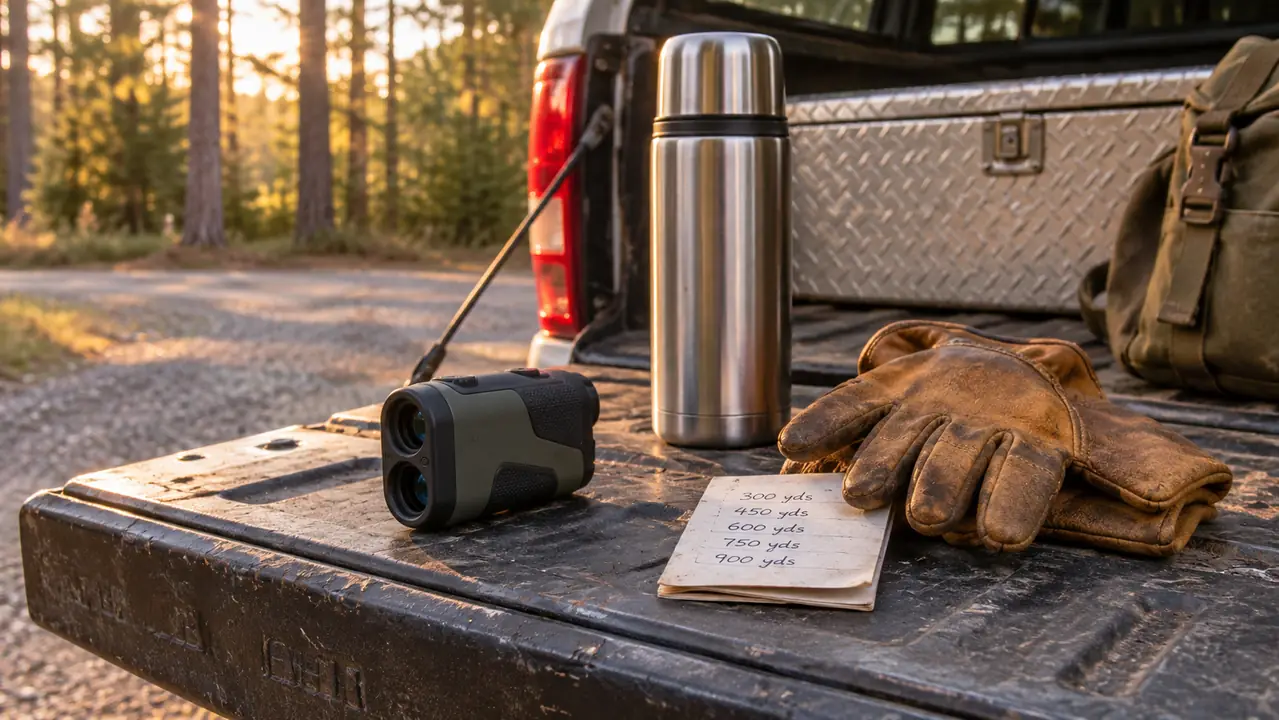
The first thing I did was make a distance card, and I would tell any man to do the same before he trusts a piece of glass. I walked off from the ladder stand to the white oak at the field edge, then to the fence corner, then to the far treeline, and I ranged every one of them from the seat. Forty yards to the first rub. Ninety-five to the oak. A hundred sixty-five to the corner post. Two hundred forty to the pines on the far side. I wrote those numbers on a scrap of paper and taped it inside the stand rail. Now a deer walks out and I am not guessing. I look at the nearest landmark, look at the card, and I know.
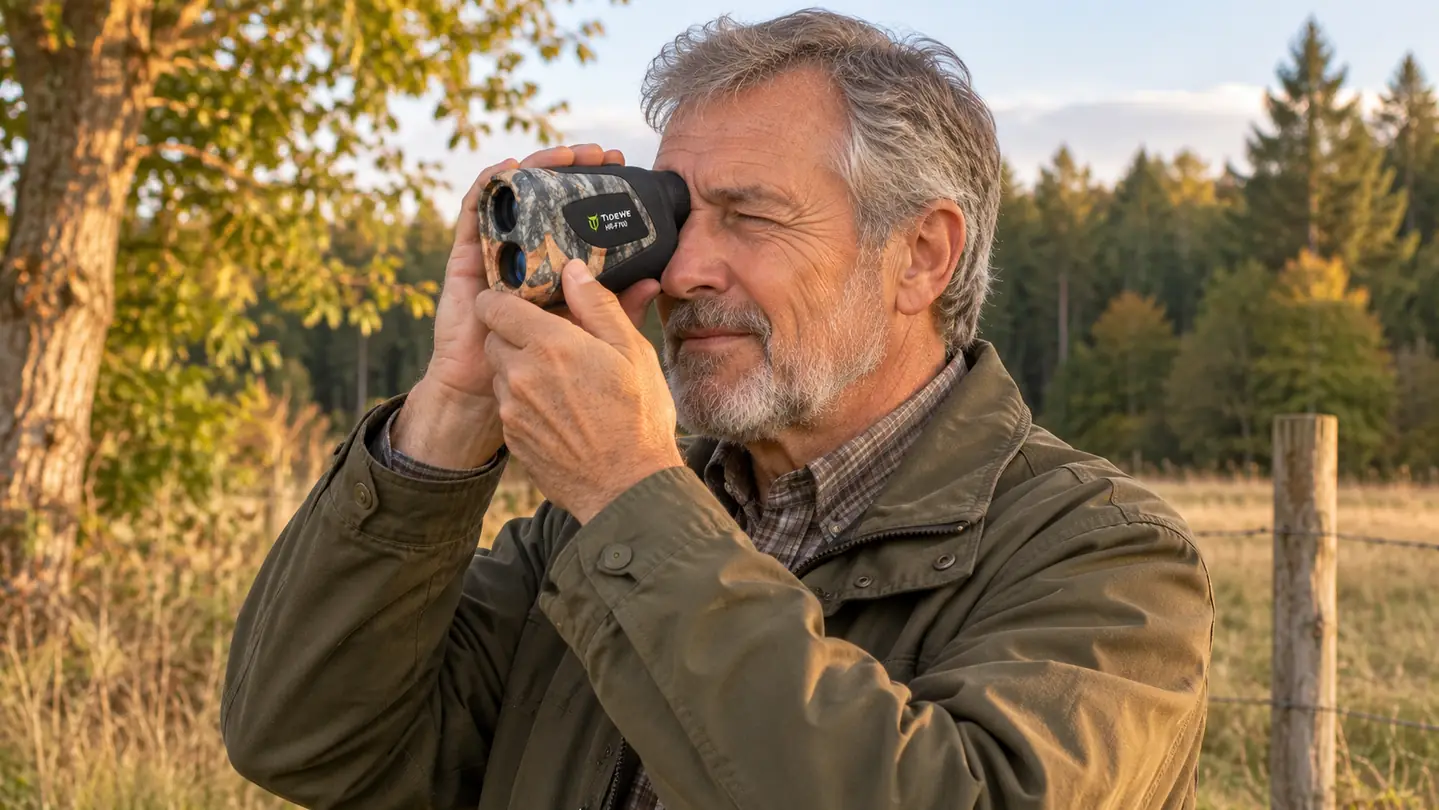
I built that whole card with the TIDEWE, standing at the foot of the stand with a pencil in my teeth, and I have re-checked it twice since out of plain stubbornness. Both times the numbers came back the same, which is the sort of boring result you want from a measuring tool. The buttons are big enough to work with a gloved thumb, and the readout is a size I can actually see at sixty-three without digging for my cheaters. That sounds like a small thing until you have fumbled a small thing in the dark.
Duck mornings were a different job. I hunt a public-land blind a few mornings each winter with my Labrador, Boudreaux, and there is not much ranging to do when the birds are working the decoys at twenty-five yards. But in the grey before legal light I ranged the far edge of my spread and the stumps on the left side, just to have the bottom fixed in my head. The TIDEWE is quick in that low light, quicker than I expected, and it kept me from swinging past the decoys on a bird that flared wide. That is worth more than people give it credit for.
Summer was the best of it. Kaylee, who is eleven and fishes with me most weekends, got a kick out of ranging cypress stumps on the bayou while I ran the trolling motor. She would call a stump at sixty yards, and the TIDEWE would read eighty-something, and she would look at me like the unit had cheated. It taught her the same lesson it taught me, which is that the human eye is a poor judge of distance over water and worse over open ground.
What the Listing Says, and What I Actually Found
The advertised range is 3 to 700 yards with accuracy of plus or minus one yard. Inside four hundred, in good daylight, on a deer or a tree trunk, that accuracy claim held up for me. I checked it against a tape in the yard at forty and at a hundred, and it read within a step both times. Past four hundred the number gets harder to come by, which is true of every rangefinder I have ever held, so I do not hold it against this one. On a bright pine trunk in full sun I got readings out past six hundred. On a deer standing in shade at dusk, honest to tell, three hundred is about where I stop trusting the answer.
Here is a small thing worth knowing because it confused me at first. The product bullets say 6.5x magnification. The spec table on the same page lists six power as the maximum. I do not know which one is the typo and I am not going to pretend I counted the lenses. What I can tell you is that the glass on the TIDEWE is bright enough to pick a buck out of a thicket at two hundred yards and clear enough to read a number off a stump at dawn. Whatever the true figure, it is in the normal hunting range and it has not cost me a shot.
The one I want to slow down on is the waterproofing. The attribute line on the listing reads waterproof, and the rating is IP54. Those two things are not the same. IP54 means it is protected against dust and against splashing water from any direction. It does not mean you can drop it in the bayou, fish it out, and keep ranging. I have had it out in a hard sideways rain and in a duck blind with spray blowing, and it never fogged or quit. I have also never dunked it, and I do not intend to. Treat it like a splash-rated tool, keep it in the case when it is raining hard, and you will be fine.
The rest of the spec sheet is plain and accurate. It weighs 5.67 ounces and measures about four and a quarter inches long, two and five eighths wide and an inch and a half tall. The body is plastic, which is how it stays that light. The battery is lithium-ion and rechargeable, so there is no coin cell to hunt for at the hardware store on a Friday night. Included components, as listed, are the case and the rangefinder. The warranty is one year from the manufacturer, and I will have more to say about that below.
I checked it against a tape in the yard at forty yards and at a hundred. It read within a step both times, and it did it with cold hands and no rest.
Where It Surprised Me
The readings from an elevated stand were the biggest surprise. A rangefinder that gives you straight-line distance only will lie to you from a ladder stand, because you are fifteen feet up and the ground distance is not the same as the line you are looking down. The TIDEWE gives straight-line, vertical and horizontal distance, so from the seat I could take the line to the deer and then read the horizontal number, which is the one that matters for a rifle. That single feature is worth more than the extra magnification a much more expensive unit would buy me. My miss last November was an elevation mistake as much as a range mistake, and I have not had another one since.
It is also fast, and I did not expect that at this price. I have a habit of ranging the landmark and then checking the animal, which means two readings in about the time it takes a buck to take two steps. It keeps up. There is a speed reading on the unit as well. I have not found a hunting use for it, and I am not going to invent one, but I have clocked a truck on the lease road with it and it was close enough to be believable.
Cold mornings did not kill the battery the way I feared. A Louisiana winter is not a Saskatchewan winter, and I will not pretend otherwise, but I have run it through a stretch of mornings in the thirties and low forties and never had it quit on me mid-hunt. The case it comes with is a plain soft case, and mine lives in the truck toolbox between hunts. It has held up better than the case that came with a much more expensive set of binoculars I own.
Where It Let Me Down
Last light is where it comes up short, and this is the honest core of the review. Most deer are shot in the last twenty minutes of legal light, and that is exactly when the glass has the least to work with. On a bright day I can pick a deer off a cutover at three hundred yards without much trouble. At dusk, with the woods going grey, the TIDEWE struggled to get a clean reading on a doe at two hundred and twenty. I got it eventually, after three tries and a little holding steady, but I did not get it fast. If most of your hunting is late evening in heavy cover, know that going in.
The second thing is the warranty. One year from the manufacturer is a short promise for a piece of electronics that lives in a truck and gets rained on. It is not unusual at this price, and I am not calling it a cheat, but a man should buy knowing that a failure in year two is his problem. Register the unit when it comes in and keep the receipt in the case, because that paperwork is the whole of your protection.
The third is the box list. The listing names two things in the box: the case and the rangefinder. That is what I got. There was no lens cloth and nothing to charge it with beyond a plain cable, and if you are the sort who expects a full kit you will be digging through your own drawer on day one. Buy a microfiber cloth and keep it in the case. A smudged lens on a foggy morning is the fastest way to turn a good rangefinder into a bad one.
What I Liked
- Reads within plus or minus one yard out to about 400 yards in good light, checked against a tape
- Gives straight-line, vertical and horizontal distance, which is what makes it useful from an elevated stand
- Weighs 5.67 ounces, so it disappears in a jacket pocket or on a neck lanyard
- Rechargeable lithium-ion battery means no scrambling for a coin cell before a morning hunt
- Held up to rain, spray and cold mornings without fogging or quitting
- Fast enough to take a landmark reading and an animal reading back to back
Where It Falls Short
- Loses confidence on deer in shade in the last twenty minutes of light
- IP54 is splash rated, not submersible, despite the waterproof label on the listing
- One-year manufacturer warranty is short for a truck-dwelling electronic
- Ships with just the case and the unit, no lens cloth, so plan on your own
- Plastic body keeps the weight down but will not shrug off a drop on rock
The Parts Nobody Tells You
Nobody tells you that you will get a wrong number first. On a moving deer in brush, any rangefinder will sometimes grab a limb or a sapling in front of the animal and hand you a reading that is thirty yards short. I got burned by that exactly once, on a doe at the edge of a cutover, and I caught it because the number did not match the landmark I already knew. That is the whole argument for building a distance card before the season. The card is how you catch a bad reading before it costs you.
Nobody tells you that steadying it matters more than the glass. A five-ounce unit held offhand in a cold wind at four hundred yards is going to wander, and no amount of magnification fixes a wandering hand. I brace my forearm on the stand rail or against a pine trunk, and my readings got twice as consistent the day I started doing it. It is the same lesson as shooting offhand versus shooting off a rest, and it took me an embarrassing number of seasons to apply it to a measuring tool.
And nobody tells you to range the landmark, not the animal. Animals move, landmarks do not. On my lease I have six or eight fixed objects ranged from the stand and written on that card, and the deer simply gets placed between two of them. The rangefinder is used to build the card once, and after that it confirms what I already know. That is the difference between a gadget and a tool, and it took me a lot longer to figure out than it should have.
Who This Is For
This is for the hunter who shoots a rifle or a muzzleloader from a stand or a blind and wants an honest number without spending what a decent scope costs. It is for the man or woman who has missed high or low because they guessed, and who is tired of guessing. It is also a fine first rangefinder for a young hunter learning to judge distance, provided an adult keeps an eye on it and it goes in the case when the hunt is over. And if you hunt from an elevated stand at all, the horizontal distance reading on the TIDEWE alone justifies carrying it.
Who Should Skip It
Skip it if you routinely shoot in the last five minutes of light. Skip it if you want a rangefinder you can drop in the bottom of a duck boat and forget about, because splash rated is not the same as submersible and you will eventually test that difference. Skip it if you are a long-range shooter working past five hundred yards, where you need better glass and a warranty measured in decades, not months. And skip it if you want a piece of kit that comes complete in the box, because this one expects you to supply the small stuff yourself. For everyone else, it is a plain, honest tool that does the job it claims, and after months of hard use I am keeping mine in the truck.
Build your distance card before the season opens
Ranged landmark by landmark, checked against a tape, and carried through a full deer season without a failure. See the current price and the exact specs on the listing.
Amazon Check Today's Price on Amazon →