
Nobody tells you that a trail camera is less about the pictures and more about the errand. You drive to the lease, park where the mud is not too bad, walk a quarter mile with a card and a pocket knife, open a housing that has been baking in Louisiana humidity, and hope the batteries did not give out two weeks ago. I have run cameras on a family lease for years, and the WOSPORTS Trail Camera is the first one I have used that made me stop expecting my phone to do the work. It is non-cellular and non-WiFi. That sounds like a limitation until you have paid for a cellular plan for a camera that mostly photographs squirrels and the back of your own head.
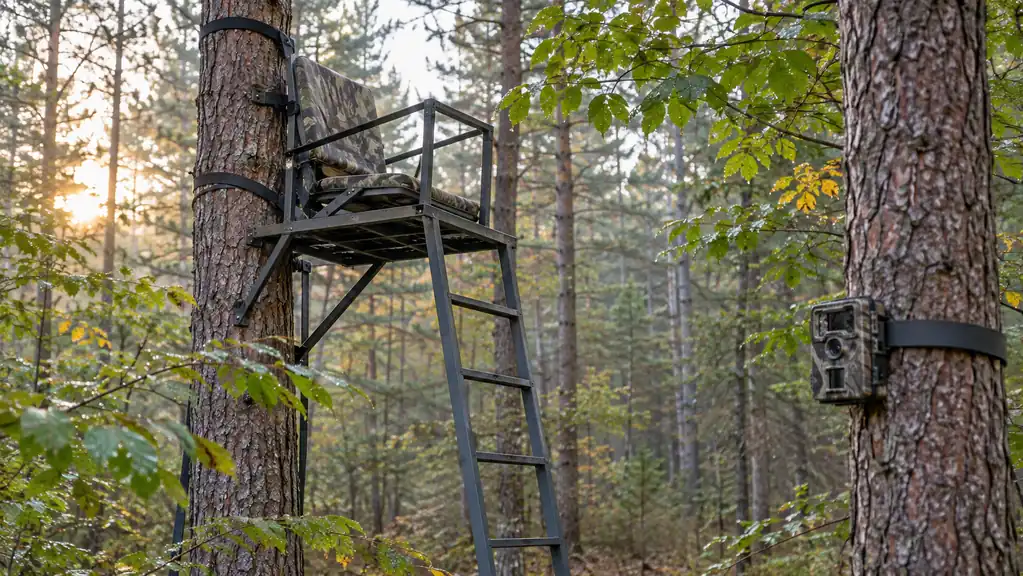
I am 63, retired from pipeline welding, and I hunt whitetail from a ladder stand on that lease. My son Travis runs a camera on the far side of the property. My granddaughter Kaylee is 11 and likes to scroll through doe pictures on the tailgate of my truck. I hung the WOSPORTS on a pine beside a trail that runs between a thicket and a small food plot. I checked it the way I check everything, when I am already out there doing something else. That is the honest way to review a trail camera. Not on a bench with a lab coat. In the woods, through a wet October and a cold December.
The Quick Verdict
A simple, tough, no-subscription camera that takes good daylight pictures and passable night pictures, if you are willing to walk out and fetch the card. I would buy it again for the lease. I would not buy it for the porch unless I also wanted a weekly chore.
Amazon Check Today's Price →Want Pictures Without a Monthly Plan? Start With This One
The WOSPORTS runs on batteries, saves its pictures to a card, and does not need a signal. If that is the kind of camera you actually need, take a look.
Amazon Check Availability on Amazon →What Nobody Tells You Before You Hang One
The first thing nobody tells you is that a non-cellular camera cannot send you a picture. It can only save one. That is not a flaw. It is the whole design, and it is why the thing does not come with a monthly plan or a signal bar to worry about. You get a card, you pull the card, you look at the pictures on a laptop or a tablet. If you are the kind of person who wants a notification while you are eating supper, this is the wrong tool. If you are the kind of person who wants to know what walked through while you were at work, and you do not mind a walk, it is the right one.
The second thing is that the menu matters more than the megapixel number. The WOSPORTS has a 2-inch color LCD screen and push-button controls. I set mine up on the tailgate with reading glasses and a cup of coffee, and it took me about 20 minutes to get comfortable. The resolution adjusts from 5 to 16 to 36 to 48 to 56 to 64MP. I started at 64MP because that is the number on the box, and I filled a card faster than I needed to. For scouting, 36MP was plenty. I used 64MP on two scrapes where I wanted a closer look at antlers.
The third thing is placement. A 120° wide-angle lens is forgiving when you get the angle close, and it is unforgiving when you point it at a limb that moves in the wind. The camera triggers on motion, so a hot branch, a passing truck, or a dog running the edge of the food plot can give you a hundred pictures of nothing. I learned to clear the brush in front of the lens and to angle the camera slightly down the trail instead of straight across it. That one change cut my junk pictures by half.
How I Tested It
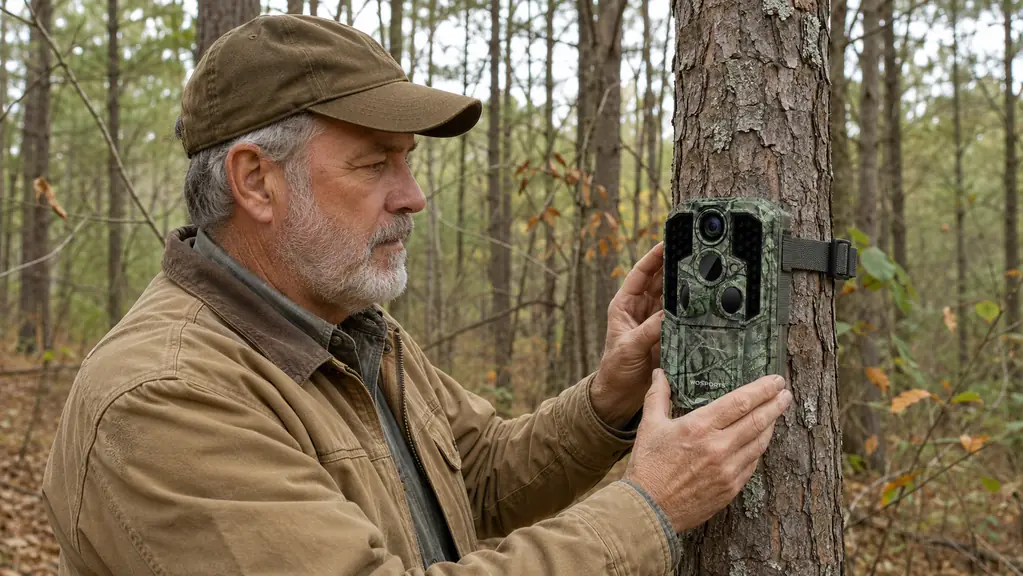
I hung the WOSPORTS in late September and left it out through the first week of January. The camera is listed at 0.55 kg and waterproof, and it rode out a wet week that turned the trail into a creek. I strapped it to a pine about chest high, angled down a lane that deer use to move from bedding to food. I did not baby it. I did not take it down every time the forecast looked bad. I checked the card every 10 to 14 days, usually on the way to fill a feeder or pull a stand.
I ran it on the settings I would actually use, not the ones that make a spec sheet look good. That meant 36MP photos, a 1 to 3 burst, and no-glow night vision. I did not run a cellular camera beside it, because I do not own one and I am not going to pretend I do. What I can tell you is how this camera behaved on its own, in real weather, with real deer and real coons and one very determined armadillo.
I also used it on the edge of the yard for two weeks after the season, partly to see how it handled pets and people, and partly because I forgot to bring it in. It picked up my Labrador, Boudreaux, at 6 in the morning and a possum at 2 in the morning. It picked up Darlene's car pulling out and a neighbor's dog cutting through. That is not a deer hunt, but it is a fair test of whether the trigger and the night picture are usable.
A trail camera that needs a signal is a subscription with a lens. This one is a tool you hang and forget until you remember to check it.
The Parts That Earned Their Keep
The daylight pictures are the strongest part of this camera. At 36MP, I could count points on a buck at 30 yards and tell a doe from a button buck without squinting. The color was good in morning light and in flat gray weather. I am not going to tell you it takes studio pictures. It does not. But for scouting, it gave me what I needed, which is a clear look at what is using the trail and when.
The no-glow night vision is better than I expected for a camera in this class. It is infrared, and it does not put a red light in a deer's face. I got pictures of deer at the edge of the food plot that were good enough to identify, and I got a few that were only shapes. That is the honest split. At 40 feet, I could see what I was looking at. At 80 feet, I was guessing. If you need to identify a trespasser at the far end of a field, this is not a thermal unit and it is not going to do that.
The 2-inch screen is a small thing that saves a lot of time. I could preview the last picture on the device before I pulled the card, which told me whether the camera was aimed at the trail or at a patch of sky. The push-button controls are simple once you learn them. The housing is waterproof, the mount works on a tree or a wall, and the whole unit is light enough to carry in one hand with a card and a spare set of batteries in the other.
Battery life was fine in the fall and shorter in the cold. I am not going to give you a number of weeks, because it depends on how many pictures you take and how cold it gets. What I will say is that the camera is battery powered, and you need to treat batteries like part of the routine. I keep a spare set in the truck. When I check the card, I check the batteries and swap them if they feel weak. That is not a flaw in the camera. That is just what a non-cellular camera is.
The Parts That Wore On Me
The biggest thing that wore on me is the walk. Not the camera's fault. But if you are used to a cellular camera that sends pictures to your phone, this will feel like stepping back in time. You have to go get the card. You have to remember to bring it home. You have to put it in a laptop and scroll through 600 pictures of a swinging branch. If you are not going to do that, the camera is just a decoration on a tree.
The menu is not hard, but it is not friendly either. The screen is 2 inches, the buttons are small, and the first time I tried to change the resolution in the dark, I changed the wrong setting instead. I got it sorted out in the daylight. I would not want to do a full setup in the field with cold hands. Do it at the kitchen table before you go.
The trigger is fast, but it is not magic. The claim is 0.2 seconds. In practice, a deer walking a trail was caught clean. A coyote at a trot sometimes gave me a blur and a tail. A squirrel at full speed was mostly a gray streak. The camera also has a 120° lens, which means it sees a lot, and a lot of what it sees is not what you care about. I got false triggers from brush, from heat, and from a hangy limb that I should have cut.
The night range is the other limit. No-glow infrared is easier on deer than a red glow, but it is not a spotlight. If the trail is wide open and the deer is close, you get a good picture. If the deer is at the far edge of the food plot, you get a shape. I learned to move the camera closer to the trail and accept a narrower view. That is a trade I will make every time.
What I Liked
- Sharp daylight pictures at 36MP and up
- No monthly plan and no signal to chase
- 2-inch screen lets you preview on the device
- No-glow infrared is easy on deer
- Waterproof housing and simple tree mount
Where It Falls Short
- No phone access, so you must pull the card
- Menu takes patience on a small screen
- False triggers from brush and moving limbs
- Battery checks are part of the routine
- Night range is limited at distance
Setup, Night Pictures, and the Limits of the Numbers
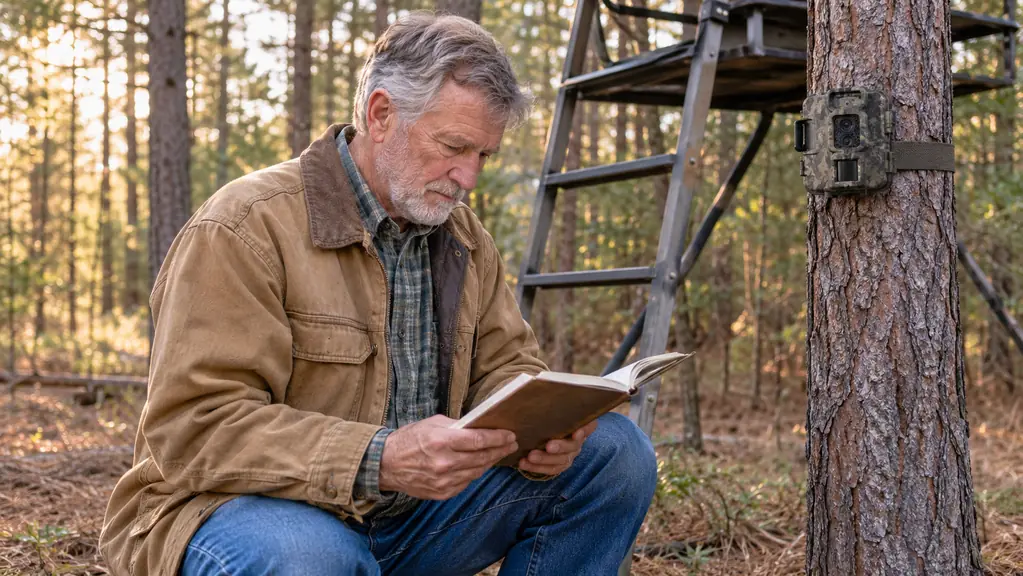
I aimed it too high the first time. I wanted to see the whole trail, so I pointed it down the lane and ended up with a lot of sky and the tops of deer. The 120° lens gave me a wide view, but it did not fix a bad angle. I moved it lower, tilted it down, and put the trail in the middle of the frame. I also cut the brush in front of the lens. A limb that moves in the sun will trigger a motion camera all day. I cut a lane about as wide as my truck, not because the camera needs it, but because I got tired of deleting pictures of a branch.
I left it on 64MP and a 3-shot burst for the first two weeks. The pictures were good. They were also big, and the card filled up faster than I expected. I switched to 36MP and a 1 to 3 burst, and I stopped worrying about card space. If you are checking every two weeks, 36MP is plenty. If you are trying to judge a specific buck, bump it up for that spot and leave the rest alone. I also learned to check the card in the middle of the day, not at dawn or dusk, so I did not leave scent on the trail at the worst possible time. Every 10 to 14 days was enough.
The box says 64MP and 4K. Those numbers are real, but they are not the whole story. The 64MP photo is a big file, and the difference between 36MP and 64MP did not change my decision to shoot or pass a deer. The 4K video is smooth, and it is useful if you want to see how a deer is moving, but it eats card space and battery. I used it sparingly. For scouting, a still picture tells me more than a video clip. The 0.2-second trigger is quick enough for a deer walking a trail. I would not call it a security camera for a driveway with cars going by at highway speed. It is a motion camera, and motion is what it does.
The title says home security, and it can work for that. I put it on the driveway for a week and it caught cars, a delivery truck, and Boudreaux carrying a stick. But it is not a live monitor. It cannot call the sheriff. It saves a picture and waits for you to come get it. If you need to know what is happening right now, you need a different system. If you need a record of what came through last night, this will do it. On a lease, know the rules before you hang a camera. Some clubs do not allow them after a certain date. Some require them to be marked. I keep a small tag with my name and phone number on mine, and I take it down when the club asks. I also wear hunter orange when I walk in during gun season, even if I am only checking a card. A camera is not worth a mistake in the woods.
The best picture I got all season was a doe looking back over her shoulder at 6:12 in the morning. No signal required.
Who This Is For
This camera is for the hunter who already walks the property. If you fill feeders, check stands, and put boots on the ground every couple of weeks, the WOSPORTS fits right into that routine. It is also for the homeowner who wants a record of what comes through the yard without adding another app to a phone. It is for the person who wants a simple, battery-powered camera that does not need a plan, a password, or a signal.
It is for the hunter who wants to know what is using a trail, not the hunter who wants a live feed from a deer stand in another state. It is for the person who will actually pull the card and look at the pictures. If that is you, this camera will earn its spot in the truck.
Who Should Skip It
Skip it if you need a picture on your phone before your coffee gets cold. A cellular camera is the right tool for that, and it comes with a monthly plan. Skip it if you will not walk out to check a card. The camera cannot care for itself. It will sit on the tree and fill up with pictures of a branch, and you will blame the camera.
Skip it if you expect 64MP to make a bad setup good. It will not. A camera pointed at the sky is a camera pointed at the sky, no matter how many megapixels it has. Skip it if you need a live view for security. This is a motion camera that saves pictures, not a monitor. If you understand those limits, it is a solid tool for the job.
Hang One Before the Season Slips Past You
The WOSPORTS Trail Camera is a simple, battery-powered, non-cellular camera that earns its place on a lease. If that is the job you need done, look at it now.
Amazon Check Availability on Amazon →